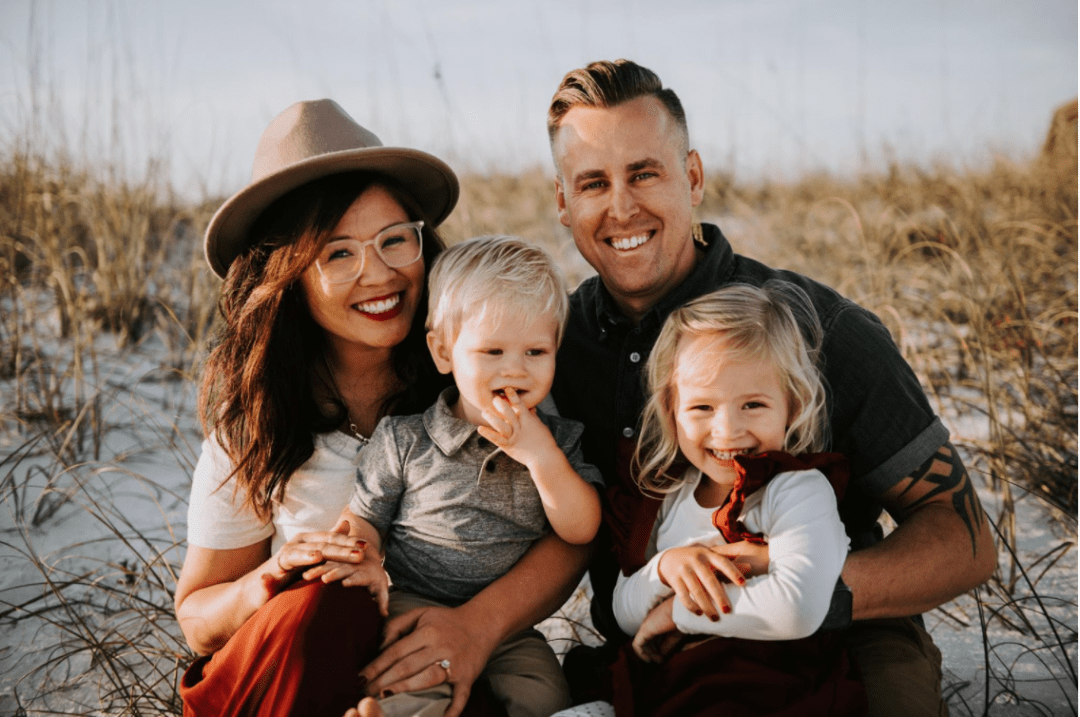
Krista’s Story: Obstetric Violence, Forceps Delivery, & Birth in a Pandemic

The Blog

Sharing Stories & Healing
Subscribe

Krista's Story: Obstetric Violence, Forceps Delivery & Birth in a Pandemic

Story of my Learning About BT

My story does not involve loss of life, a near-miss, or surgery, and it is complex, spanning my entire reproductive, and perinatal experience. I struggled for such a long time, and actually still do, to a lesser degree, with feelings of guilt surrounding the fact that I felt traumatized by my experience, and that its impact on me has been so profound. But a quote I recently discovered by Viktor Frankl, has been so helpful in how I think about trauma. The quote, from man’s search for happiness, draws an analogy between human suffering, and the behaviour of a gas that is pumped into a chamber. The gas completely fills up the chamber, no matter the size of the container, which is helpful in considering trauma as a complete all-consuming impact on the mind and soul, regardless of it’s perceived “size”. This analogy helps me understand that all trauma is valid, and deserving of compassionate space, and support. It burdens the mind, body, and soul to such a profound degree, it is all-consuming, and it all matters.

My Own BT Experience

While I don’t feel able to share specific details about my entire experience (and also don’t have awareness of all of the details surrounding the birth), I can freely and openly share about it in more general terms. I experienced infertility issues before spontaneously becoming pregnant, which happened after a “chemical pregnancy” following unsuccessful rounds of fertility treatments in late 2019. I hadn’t even identified or processed the loss of that embryo as a “loss”, until exploring things further in therapy much later, but it’s impact and burden on my mind and soul were extremely significant.

While I was pregnant, I never quite felt how I had expected I would. I felt anxious, completely preoccupied with worry, and terrified that I would somehow lose the pregnancy, or even that it wasn’t real, but a result of the hormone therapy somehow. I also welcomed my son in the late spring of 2020, during the first wave of the pandemic, so for much of my pregnancy, severe health anxiety and constant risk assessments, along with my shattered expectations of what pregnancy would look, and feel like, further traumatized me. The entire perinatal experience was so devastatingly isolating, and especially during the first year postpartum, I suffered from severe depression and anxiety symptoms.

The actual birth of my son is where my story gets further complicated still, but in general terms, I felt traumatized by obstetric violence, provider neglect, and a complete lack of informed consent, during a rushed forceps delivery with an episiotomy. There were so many masked and face-shielded professionals in the room at my feet, I don’t know who they were, or even what their titles were, I know I was told that my sons heart rate was rapidly decelerating, but I didn’t know what that meant or if he (and I) were ok. Through circumstances beyond anyone’s control, my husband was unavailable to me during much of the birth, which again felt traumatizing through isolation, and I felt like I had no voice and no information about what was happening. Only afterwards I found out I had had a forceps assisted delivery, an episiotomy, and later in my shared recovery room (an environment which was horrifying to me during that first-wave with no vaccines and little information about the virus) we discovered that my newborn son was experiencing rapid breathing, and had some excess fluid in his lungs. 

We were so isolated in that room. With no information. Hours and hours alone with little to almost no updates at all, and never from the same professional provider. When could we leave? Were we all gonna be ok? Is something terrible going to happen? Is my son ok? Will he need to go to the NICU? Also, WHAT THE F just happened in that delivery room?!? We stayed in our recovery room on the L&D floor for 3 days and 2 nights. I still don’t fully understand why. I knew they initially said they wanted to monitor my son’s breathing, but where was that monitoring? We were largely ignored during the recovery stay, and left completely alone on that third day until finally being discharged by another new face, in the late evening. I knew I was not at all feeling ok, but I also knew within the depths of my soul I had to get my son home. We were not safe here and we had to get out, I remember thinking.

In the early weeks and months postpartum, I was obsessed with checking on my son and hearing his breathing, watching his chest and belly as he breathed, obsessing over the monitor as he slept. I constantly thought I heard him coughing or wheezing or gasping, I felt completely neglected and isolated, and I needed so much more support (and an assessment toward treatment!). I have begun the process only recently, of obtaining my personal health records from the hospital where I gave birth, although that in itself has been such a headache of a process to make any headway with. But I am appreciating the fact that I am ready to better understand what happened during my son’s delivery.

As I wrap up my story, or the version that I am able to share at this point in time, I do want to share that I am receiving treatment for my mental health (for me that includes medication), I do feel hopeful, I am NOT OK some days, and I accept that someday is not forever. I hope this story helps to empower anyone else who is feeling a sense of guilt surrounding their feelings about their experience. Also, I hope anyone reading this understands that all Birth Trauma is valid, that it deserves so much more support, and that there can be hope.

Bio

Name: Krista Fraser-King

Instagram: @mindcaremomma

Personal blog: mindcaremomma.com

Facebook group: First Time Moms of Covid

Location: Ontario, Canada

Jordan’s Story: Emergency C-Section & Postpartum Healing

The Blog

Sharing Stories & Healing
Subscribe

Jordan's Story: Gestational Diabetes, Emergency C-Section & Postpartum Healing

Pregnancy Journey

My daughter Julianne was brought into this world at 11:21 pm on Tuesday, March 26, 2019. Just shy of three years later I still get a lump in my throat talking about the process of bringing her earthside. Jules is the light of my life, and although I bask in all of the glory of being a Mama, as I know all too well the overwhelming ache women experience longing for a child of their own, I can’t help but feel relieved to know I am not alone as I continue to process the trauma from a moment in my life I never imagined would bring such feelings. 

My path to conceiving Julianne, at the time I thought was extremely difficult to which now after the proper education, I think it is quite normal. It is the lack of education for women on how to conceive/know their bodies, how pregnancy can be SO hard, how extremely difficult bringing a child into the world CAN be, and how feeling depressed postpartum is NOT uncommon– that brings about these expectations I think we all have for ourselves as soon as we start to try, or unexpectedly conceive. It took me eight months to conceive Julianne, and each month I cursed my body and grew further away from the happiness I wanted to feel. 

I have a video of when we found out I was pregnant. I still watch it to this day, because I remember thinking ‘this is finally happening’, not having any idea what my journey would be to follow. Around week five I became extremely sick, almost borderline HG sick.  I was a teacher at the time teaching Kindergarten, and let me tell you, finding the time to pee during teaching when pregnant was difficult enough, but now finding the time to puke, forget it. My husband and I finally made the decision around thirteen weeks for me to quit teaching, and become a homemaker. I am extremely lucky to have done this so early in my pregnancy. I luckily had a better second trimester when my nausea subsided around sixteen weeks, and I began to breathe. It was around the cusp of my third trimester I found out I had gestational diabetes. 

I had to go on a special diet (oh and I am a vegetarian so super fun to kick the carbs, NOT), I had to prick my finger four times daily, and I had to inject myself with insulin morning and night because I could not control my fasting blood sugar with diet, and exercise. My OBGYN who I do love so much, made the call to induce me at thirty-eight weeks and five days. I looked at my calendar, and this would put me at being induced on Sunday, March 24. My OBGYN was also very reassuring that the induction process would be a breeze, and she would be able to deliver my daughter herself on Monday, March 25. 

Well, the 24th came before I could blink, and soon I was Sitting in a hospital bed signing papers waiting to meet our little girl, and begin the induction process. 

Birth Journey

Now, before I continue my story this is a little disclaimer that some of the events that took place I do not think are common, and my daughter’s birth story truly is what we like to call, a perfect storm

I honestly did not make a birth plan. I had a couple of wishes as far as who would be in the room, what music I wanted to play, and that I would accept an epidural. Other than that we went in with clear intentions that we understood things could change on a dime, and we just wanted a healthy Mama & baby. Saying that out loud now, makes me cringe because although we are both physically healthy, I am still struggling mentally as I mentioned before. 

We checked into the hospital on March 24th, 2019 at 9:00am. My induction plan, I was told, was to start with a medicine called Cervidil, which is inserted like a tampon into your cervix to help prepare it for delivery. This happened around noon, I think, a lot of the minor details are still fuzzy to me. I knew around four in the afternoon something was wrong. I was not progressing, and I was in extreme pain. I could not even move my legs for a nurse to check me, and by 5:00pm I was the woman you see in movies who is screaming in pain, and the whole floor can hear her although I was not anywhere close to pushing. Finally, an unbelievable nurse said, “this is not in here right”. To which I replied, “then get it out.” I had to grab my husband with every ounce of my strength as she reached into my raw vagina, and removed the Cervidil insert. I was crying, my husband was crying, and my mother was crying. It was already not what I had pictured. This same nurse recommended I go down to Labor and Delivery (I was currently on an antepartum floor) to receive a walking epidural for the pain. 

Next, after being on the walking epidural, I was comfortable enough for an OBGYN to check me, see how far along I had made it, and then made a decision on how to proceed. She decided to insert a Foley Balloon which I do not remember feeling. All I remember is hitting that green button for more medication every time it shined and passing out over and over. Next, I do remember another OBGYN breaking my water somewhere on Monday the 25th as well as starting me on Pitocin. I don’t remember seeing my OBGYN on the 25th, and I started progressing a bit after this, but it was not until Tuesday morning the 26th that I really started to show progress, and I asked for my first real epidural. I say first because I actually received three. 

There were complications with each epidural to the point that the anesthesiology team asked my mother if I have ever had a spinal injury (I haven’t). I guess my spine was reacting as one that had something out of place, and it took three epidural placements to get one that worked. After that, I slept, and I slept A LOT. Even though nurses kept waking me for blood sugar levels, or anything else they needed, I tried to sleep, now forty-eight hours past my original induction time. 

I remember around 8:00pm on March 26 the midwife asked me to start pushing. I do remember taking note of the time in my head because I was excited my daughter may be born within the hour. Well, at around nine forty-five, when I was losing steam, the midwife yelled ‘you’re almost there’, to which I replied, ‘You’ve been saying that for almost two hours now’. This is where things start to get really fuzzy for me. 

I remember blacking out, I remember having the conscious thought I can’t do this, and I am done. I remember my husband catching my head as I fell to the bed, and then I remember waking to the sound of his voice asking ‘are you still with us’. I remember looking in the corner to see my Mom bawling, I remember oxygen being put on me, and I remember an OBGYN stating he was going to try a vacuum assist. I don’t remember anything about the vacuum assist, and my husband actually thinks I was unconscious the last time he tried, making a total of three attempts. 

I also know now after three attempts, they do pull you in for an emergency C Section. I remember the room getting brighter, I remember two nurses holding me up for my spinal, and I remember being laid down. I blacked out again. I then remember my husband coming in, and holding my hand. I remember hearing his voice shake, and the anesthesiologist reassuring me I was breathing (I couldn’t feel my chest move, and was anxious I was not breathing). 

Then as if greeted by a warm sunrise on a cold winter morning, the blue shade was lifted before my eyes, and my daughter appeared at 11:21 pm. I remember thinking once more ‘this is finally happening’. They let her touch my face, and I still remember the comfort her touch brought. I remember trying to comfort her right back with my voice. Then I remember my husband leaving my side. 

The next thing I knew I was in a recovery room, looking over at my husband cuddling our little baby girl and a nurse begin to explain to me how to breastfeed (Yup, barely conscious, but let’s learn how to breastfeed.) I don’t remember much of the next twenty-four hours after this. I don’t remember certain visitors ever coming, or leaving. I don’t remember much of the first precious moments with my baby girl. I don’t remember being in pain, or even eating. I just remember being extremely tired. 

Motherhood Journey

Somewhere around the morning of Thursday, March 28th, I remember waking very early to my daughter’s cry. We were successful at breastfeeding, and I spent the entire day learning everything I could about her sounds, her smells, and her touch. I was finally able to start feeling a little more human using the bathroom, and eating take out food. My husband had not left my side in almost five days and was exhausted. I am truly grateful for the human being he is, as I would have never made it here without him. I remember him caring for me, and our baby girl that day like he had been doing it his entire life. I just remember falling asleep that night thankful for my family.

Friday, March 29th we were discharged from the hospital after I begged to leave. I had been there a total of five days, and I was not going to spend another night in the hospital. We learned before leaving that Julianne was diagnosed with Jaundice (this did resolve within a week), and we made her first pediatrician appointment.  

After this, we dove into being parents to our little girl. Late-night feedings, diaper changes, night sweats, pain medication, and getting to know one another. I truly do remember feeling happy. Around seven weeks postpartum I started to dread breastfeeding. I did not connect with Julianne this way, and it just seemed like a chore that caused us both pain. I went to my eight-week postop appointment where my OBGYN was encouraging about not breastfeeding any longer if it was causing me to become depressed.

Around three-months postpartum, I was back in the office asking for a referral for a therapist. I blamed it on being too young, too inexperienced with newborns, or having too many expectations for the shallowness I felt inside, and the overwhelming anxiety. I am thankful to have a therapist who is experienced in postpartum depression, anxiety, and trauma. She made it very clear to me how traumatic my birth was, and how it was ok to feel like I needed to grieve, process, and heal from it. What a strange, yet freeing sentence to be able to finally understand it is OK to need to take care of me in the process of learning how to be a Mama. 

I’m still learning every single day. I have done different types of therapies with my therapist to re-process my traumatic birth, but my journey is not over. My husband and I actually decided to try for another baby in 2020, but were unsuccessful. I was diagnosed with secondary infertility, and because of everything I have been through, when we were presented with fertility treatments my husband said something shocking and much needed. He looked at me with his sweet eyes and said, “Babe, it’s YOUR body. You decide if you want to do this, or don’t want to do this and I will be here with you every step of the way either way.” 

My therapist and I talk about how freeing that was for me. The expectation of having two+ children was now different, and something I didn’t want. I am different. My trauma changed me, but it did not cripple me. I enjoy every single minute of being Julianne’s mama while learning to love myself in the process. I’ve learned I’m different, but still the same in other ways. Maybe all mothers experience a transition like this. Mine just felt more drastic as soon as I was freed knowing my trauma was validated. Hearing others’ stories of their traumatic births was oddly healing for me as well. I have also decided to apply to a master’s program to get my MA in clinical mental health counseling because if I can help a fraction of the women out there the way my therapist has helped me, I would be forever grateful. To know I am not alone, in how disconnected I became from my birth story, and to know my feelings of grief for my birth story are valid is still comforting to me. I can only hope my story allows for the same sort of comfort for someone else who has been through something similar. 

A Little More About Me 

My family and I live right outside of Orlando, Florida. My husband and I have been together for almost eight years. I have a Bachelor’s degree in Early Childhood Education, and I am applying to Master’s programs for clinical mental health to pursue my true passion later this year. My daughter is almost three, and we have a blast every single day (while she tests my patience). We have a little aussiedoodle named Lady who has completed our family earlier in 2021. I am obsessed with reality TV, Disney World, and jumping rope (favorite exercise). Julianne would like everyone to know her favorite show is Bluey, and she loves mac and cheese (typical toddler.)

Angela’s Story: The Phoenix, Prolapsed Cord, and EMDR

The Blog

Sharing Stories & Healing
Subscribe

Angela's Story: The Phoenix, Prolapsed Cord, and EMDR

 Phoenix. According to an ancient legend, this mythical bird is known for burning to death and rising from its ashes. A symbol of renewal and birth. For four years we spent an adventurous time full of personal growth in Phoenix, Arizona where we would gain inspiration for the name of our second born, Phoenix Kingston-or what we like to call him, P.K. Little did we know, this name would correlate with the experience of our own little miracle boy who rose from the ashes himself.

Prolapsed Cord and HIE
Eating potato wedges. This is the last moment of peace that I remember before my traumatic birth experience. With my second child, I promised myself to opt for a natural birth. I already knew the feeling from my first child. The cramps, the tightness, the lowering, I felt it all. I breathed heavily and in between each breath my husband was fueling me…with potato wedges. I told myself, “I’ve got this.” As I switched positions, my water broke and I was 8cm dilated. This is it, here I go. What happened next was very unexpected. The cord came out first. I had no clue what that meant but there was a pause in the room. In an instant I heard rushing around and my midwife telling me to quickly flip over. This is not how this should be. I was getting ready for the mountain, the ring of fire, the moment I meet my only son. A prolapsed cord is a rare occurrence that needs immediate attention and a very immediate c-section for my son, who experienced a lack of oxygen, blood flow to the brain, and eventually swelling of the brain or HIE. I could sense the nurses and the midwife’s mind snap into a quick rehearsed reaction. They knew this was a medical emergency, they have practiced this situation before. At 8cm and no epidural, I was screaming and being wheeled quickly to the surgical room. My husband was left behind. In between the chaos, I remember letting out moans and screams from the stronger contractions—then I began to cry. I could see a bright light and a scrubbed-up team that I barely recognized now. In between my screams of pain, I stared at the bright light. I quickly asked myself “Will he be ok? Will I be ok? This contraction hurts!” I asked in tears “where is my husband?” It wasn’t until my midwife powerfully said, with all seriousness in her eyes, “Angie, you are having a c-section. I know this is not the plan…but I AM NOT leaving you.”  I had to let go and let God. As my eyes swelled up and my lips tightened, I nodded my head in understanding, like a little girl trying to be brave. It was time to be a good patient. It was time to trust the team and it was time to trust what happens next. My on-call doctor arrived and quickly performed the surgery in her flip flops. There was no time. I am grateful for every second that was spared.  

Anesthesia was far beyond my plan, I like to feel and have issues with losing that sense of control. My son was described as floppy with multiple Apgar scores of one. After about ten minutes of a bag and mask ventilation he spontaneously started breathing on his own. Before that, my husband already began grieving his possible death. I missed this pivotal moment in the story because of the general anesthesia. I woke up fuzzy back in a different room. My first question was, “Does he get to stay here with me?” “Yes.” And I sighed with relief. I was so happy that I did not register that I never held him or saw him when he was born. I never saw them resuscitating him. I never got to console my husband. They wheeled my bed to where he was so I could at least hold him for a short amount of time. When we did skin to skin, I remember crying and just telling him, “We are ok, we are ok” over and over. He stopped crying and he needed me, I could tell. Hours went by and I thought it was finally over, but they came back in my room to tell me my Phoenix had a seizure, and he would be transferred an hour away to the NICU. At the hospital, they began hypothermic cooling therapy to help with his brain swelling. It was storming so instead of a helicopter the NICU ambulance drove down immediately to take him to the hospital. He cried for hours while they wired him and tried to give him morphine. I was not able to feed him due to the cooling process. He was so inconsolable, the nurses placed him in my arms for a few moments and he immediately stopped crying. The nurse quietly said, “Good job, mama.” I felt a small sense of fulfillment, like I was right where I belonged.

 I sat in my wheelchair and watched in tears as they wheeled him away. The days were long, and my recovery was lonely. We drove back and forth an hour each way every day to see him. I needed to be with my daughter and my son every day so that required a lot of movement for me instead of healing. When we finally brought him home, I became terribly ill and was hospitalized for three days. As I was in the hospital, I was in so much malaise. When they took my blood the lab technician said, “I remember you. You are Phoenix’s mom. That boy is a fighter.” I smiled and closed my eyes. Those few nights without my family were so lonely and I just wanted to heal my body and go home to my babies. I always praise my resilient Summer, who was a one-year-old at the time, and my strong husband for this difficult time in our lives. They are the true underdogs in this story. The days that followed were filled with wonder, worry, and multiple appointments with occupational therapists, neurologists, and pediatricians. I often struggled with questioning myself and wondering if I was keeping track of his progress well enough, or if I was missing something. The worry will always be there, but the ability to remain present with my children took some time. 

Phoenix is now two and a half years old. He was recently released from neurology and occupational therapy. He is so strong, brave, and excels in all his milestones. I am forever grateful for him, the care we received, and having the platform to share my story with other struggling mothers who are stuck in the unknown. 


EMDR Changed My Life 

When we are mothers to a newborn our focus shifts. Our instincts kick in and we become this nurturer and selfless caretaker. We are deep in motherhood. How do we have time to think about what happened during our delivery? He is ok, right? For a little over a year, I cried to myself and had bouts of anxiety, almost blacked out a few times. Silently, I felt I was not allowed to have a reaction; remember he is ok. The sound of surgical tools clanking, beeping machines, and that distinct hospital smell would put me in a trance. I have had panic attacks in inconvenient places. All his cries, every time I was in a hospital, and every thought was not just a vivid memory; I was still there. Trauma does not care if you know there are far worse outcomes. After a lot of research, I signed up to pay out of pocket for a therapist who specialized in Eye-Movement desensitization reprocessing and trauma. I was treated for PTSD. Each session was not easy but every day I threw myself into the arena. Eventually, I would walk in with a big sigh and say, “ok Doc, Let’s do it.” Through EMDR I was not just treated for trauma, but I was educated on neuroplasticity. Our neural networks in our brain can be reorganized and reprocessed. Through this exhausting therapy, I was able to reprocess the past in a healthier way. I felt like I completed a marathon in my head. In return for putting in the work, my thoughts led to me eventually saying “that was awful, stop saying at least and comparing yourself to others.” Thinking of what could have been worse should not be a coping mechanism for big events. What happened was rare, my reaction was normal. After therapy, my brain saw my memories as a movie from the past simply playing and I was not there anymore. I finally saw my son for who he was. A miracle. 

 About The Author

Angela White is a military spouse who graduated from the University of Central Missouri. Her background includes financial services, education, and working for the department of defense. She currently stays home with her two toddlers, Summer and Phoenix, near Destin, Florida where they enjoy many trips to the beach. Occasionally, she assists her active-duty husband on his veteran-based podcast, HeroFront, that encourages fighting the mental health stigma through stories of resilience and success. By being open with her struggles, she continues to help other mothers heal and feel less alone.


Catie’s Story: IUGR & Baby Loss

The Blog

Sharing Stories & Healing
Subscribe

Catie's Story: IUGR & Baby Loss

Prior Birth Complications and Trauma

My first pregnancy was relatively uneventful, but we were shocked when I delivered a full-term baby at barely 5 lb. He ended up needing to be transferred to another hospital for NICU care. My doctors said it was probably a fluke. In my second pregnancy, they monitored me a little bit closer, and unfortunately, our baby girl was already measuring small at 16 weeks and I was diagnosed with IUGR (intrauterine growth restriction) and placental insufficiency. The whole pregnancy she continued only growing half what she should have. I was monitored extremely closely with twice a week fetal surveillance starting at 25 weeks, and eventually at 33 weeks I had to be hospitalized for full-time monitoring as the umbilical cord was barely flowing. The doctors induced me at 35 weeks and she was only 3 lb, about the size of a 30-week baby. During that whole ordeal, the thought never crossed my mind that she could have died – that they were doing so much monitoring on her because of that risk. I naively was only worried about how long we would have to stay in the NICU. Thankfully we were able to get her earthside. Looking back on this experience, I can see now with clarity that I was surviving through the trauma of these complications through dissociation and avoidance practices. I never allowed myself to process any of what happened to me. And in hindsight of everything that followed after, I now see that the avoidance of processing this initial trauma only made future trauma more compounded.

 After she was born, my doctors finally admitted that there must be a problem and ran a bunch of tests on me. The tests came back positive for Lupus and a rare blood clotting disorder called Antiphospholipid Antibody Syndrome, which can cause severe pregnancy complications due to placental insufficiency. I was told if we wanted another child, if I took daily blood thinner injections and Lupus treatments then it would take care of the problem and we could have a healthy baby. It felt great to have answers and I felt so confident. I did everything I could to make the next pregnancy successful – I lost weight, was exercising, and we did preconception counseling with our OB plus two specialists to plan out what medications I should use. We were excited.

 Olivia’s Pregnancy – Antenatal Complications

 We conceived quickly, and for the whole beginning of the pregnancy I was thrilled. I took the injections every day – I was excited imagining what it would be like to take a baby home right away and not have to go to the NICU. I was so naive taking for granted that this treatment would work. Unfortunately, again at 14 weeks, our baby girl was showing signs of IUGR. I still never thought anything would happen to her – my second child made it! No one really explicitly told us that IUGR was a leading cause of stillbirth or that we should be worried. At a 17 week scan, her growth was even farther behind. She was literally measuring at less than zero percentile, which I didn’t even know was possible. But her heartbeat was strong, and the umbilical cord flow was still in the healthy range, so I had great hopes for her and big dreams about bringing her home to our family. I started to have doubts when I joined an IUGR support group online- it seemed like every story I could find that talked of a baby as small as her at this early in the pregnancy ended in stillbirth. It was then that I began to fear. My continued trauma had me living constantly in a state of hypervigilance and anxiety. I know now that my traumatized mind was never allowed a moment of rest. And at the time, without awareness and knowledge of trauma and how it was affecting me that spaces like The Birth Trauma Mama has provided me, I didn’t know to seek help. I thought what I was experiencing was normal.

 Olivia’s Birth

At 18 weeks, we went on vacation to visit my husband’s parents in Michigan. I was just sure everything was going to be fine. Our baby girl was really active, and I felt her moving around all the time, including the night before we left. Unfortunately on the plane, I started to bleed, and I realized I hadn’t felt her move most of the day. I hoped against all hope that I just hadn’t felt her because we woke up so early and were running around getting ready to leave. The spotting got heavier, and I started cramping too. In my heart right then I knew something was wrong and I think in my heart I knew she was gone.

My husband’s parents picked us up at the airport and I told them right there in the parking lot that I needed to go to the hospital, that I thought I was miscarrying. Here I was, in another state, away from all my doctors who knew my medical condition and would take great care of me – I knew this was going to be bad. On the way to the hospital, I started having regular contractions.

Hospital Trauma

When we walked into the ER, they asked me my due date. They said I was ONE DAY before their cutoff to be able to go straight to labor and delivery, that instead I had to go to the ER. I started crying profusely right then. Somehow I just KNEW that the ER was not going to be the place I would get the best care. I begged them to let me go to labor and delivery and they said no. I was SO mad at myself for not asking the cutoff first – I could have just said my due date was one day different and had a much better experience. But no, I was faced with no compassion and sent to the ER, in a room with no private bathroom, while in labor. I had heard horror stories of women miscarrying in the ER – I saw myself becoming one of those statistics before my eyes, and with a fully developed baby so agonizingly close to viability. I couldn’t believe we were not given the grace to give birth to our baby in an actual birthing space.  I waited for what seemed like an eternity in that non-private ER room with just a curtain and no door, having full-on regular labor contractions, in excruciating pain with the refusal of pain medication. I had to wait for an ultrasound tech to come pick us up, which took forever. They told me my husband couldn’t even go with us to get the ultrasound – I put my foot down and INSISTED that he go with me or I wouldn’t go, so they finally let him. I had to sit there getting this ultrasound, where they wouldn’t even let us see the screen. But I heard the complete static in the place where I knew her heartbeat should have been. And it was over way too fast – two minutes and we were done. I knew it then and the devastation was already kicking in. But I prayed against all odds that maybe I was wrong. Maybe she was still there. Maybe.

What seemed like hours of pain and contractions later, the nurse finally came and told us what I already knew – that she was gone. We cried together. I can’t believe how much I cried. But soon the tears stopped when the contractions got even stronger. I had to give birth to our sweet girl, who we named Olivia right there in the hospital.

The nurses and staff were completely dismissive of my emotions. I insisted on being taken to labor and delivery to give birth to her. I just knew that the nurses there would have training in how to help me with compassion and sensitivity to grief. But they kept saying they “paged an OB” and “he wasn’t answering.” They still couldn’t give me anything for the pain for that same reason. I kept asking them to page again – I was pacing around in so much pain from the labor. The PA who was waiting on the OB was clearly clueless – she at one point told me they might just send me home with drugs to “pass everything.” A quick Google search told me that protocols do not call for that when a patient is that far along in pregnancy, especially on blood thinners, as the risk of hemorrhage is way too high. I told the nurse “I shouldn’t be here – I should be in labor and delivery,” to which she replied “it’s really a gray area…” (presumably because my baby measured smaller than her gestational age), to which I replied – “MY LIFE IS NOT A GRAY AREA.” Losing your baby is traumatic no matter what the circumstances, but facing that in the midst of completely uncompassionate, uncaring, and unqualified providers and being at the mercy of a doctor “not answering his page” while facing the tragedy of your life – being in a non-private ER room while in full-on labor with a dead baby – that added a whole other layer of trauma that I can’t even begin to describe.

My contractions got much stronger and closer together, and I felt sure she was about to be born. I started panicking – I was NOT going to let this baby be born in this ER room. She deserved better than that. I deserved more than that. A thought popped into my head – I need to call labor and delivery myself. I grabbed my cell phone and dialed the same hospital I was sitting in, right there from the ER room, and explained what was going on. The nurse I talked to was appalled they had kept me there so long. She profusely apologized, and an OB was in my room within 5 minutes, I was given something for pain shortly after, and I was upstairs in a labor room in another 15 minutes. I was so thankful that the thought to call came to my mind, but wished I had thought of it sooner.

Upstairs, as I had hoped, the nurses and staff were so much more caring and compassionate. They walked me through everything that would happen and treated us with dignity. The room was much more peaceful and I had a private bathroom. I labored for another 30 minutes or so, and then she was born. I was standing and since she was so small, I didn’t have time to call anyone. I caught her myself which was terrifying, but something I’m so proud of looking back, that I was strong enough to do that in the midst of the pain and the screaming tears. We hit the call light and we had about 5 nurses and the doctor in our room in less than 30 seconds it seemed like – they were so attentive and caring. I can’t imagine if that had happened in the ER room – I probably would have had to hold her standing there bleeding for SO long before anyone came if we were still there. But instead, these sweet nurses took care of my Olivia with dignity and made sure I was safe and well with compassion.

I held her after. She was so very tiny from the growth restriction, but I could tell she had the same sweet facial features as her older siblings. She was beautiful. My biggest regret, one that will haunt me for a lifetime, is that I didn’t take any pictures of her. I thought I wouldn’t want to remember how small she was – that was, after all, what caused her death. I thought I would want to remember her by her ultrasound pictures when she was still alive. I had no idea that was something I would want later. So I didn’t, and I declined when the nurses offered to. The reality that I don’t have these pictures to remember her by is something that hurts me every day. They gave me another medication for the pain, and unfortunately, it made me extremely sick. I was vomiting and seeing double the whole time I had with her. Because I was so sick, I didn’t hold her as long as I wanted to. That’s another big regret I have. I have had to tell myself over and over “I did the best I could, in the time I had, with the support I was given.” I was not given the support to know what to do in this traumatic experience I knew nothing about. 

I asked the nurse to take her away way sooner than I should have because of the sickness. I spent that whole night crying in bed, wondering where she was – I knew she had to be in a fridge somewhere, but what did they put her in? These are haunting thoughts you never even imagine yourself thinking. I wish I knew it was okay to ask to see her again after I wasn’t throwing up anymore. I wish they had offered so I knew it was okay.

Processing the Trauma

In the weeks and months following her birth, I started having extreme panic attacks and anxiety. I couldn’t quit replaying the experience over and over in my head. The extreme desire to find answers and meaning for what happened to me was obsessive. At my darkest point, I stayed up all night long researching fetal autopsy and pathology reports trying to grasp at anything to explain what happened to her. Deep down I knew this behavior was not normal and I shouldn’t be doing this, but I was so shattered that it was all I could do. I stopped sleeping. I don’t even feel like I fully grieved her – I was too busy suffering from the symptoms of the trauma of her pregnancy and birth that I didn’t allow myself the luxury of grief.
I finally realized I needed help. I sought out a local counselor who specializes in both trauma and grief and began EMDR therapy. EMDR was so very hard. I found myself reliving her birth over and over. But as I pressed on in therapy, I found her birth becoming less traumatizing. I found clarity in being able to remember her birth and remember what happened to me without shattering. I realized so many new things about my experience and feeling new things. Realizing that the way I was treated at the hospital – being left alone and unsupported in the very place you came for help – was at the root of my trauma, and was something I didn’t deserve and couldn’t control. But I could take control in processing that trauma and moving towards healing from it.

Years later now, I still feel like I should get back into therapy to make more connections in the way my body processed the compounded trauma of my previous birth complications, and even to explore how unrelated childhood trauma ties into my experiences as a whole. I have much work to do and spaces like The Birth Trauma Mama make me realize that the work is valuable. 

Helping Minimize Trauma for Others, For Olivia

As I was processing my trauma after her birth, I felt a strong pull to do something tangible to prevent other women going through infant loss from facing as much hospital trauma as I did. I don’t want any other mom to have to process both the grief of losing their baby on top of unfair and unsupportive treatment from hospital staff. I want moms to be able to deliver in hospitals with well-trained staff, who are equipped with tangible ways to lessen the trauma for them. To support them in holding their baby and making memories so they’re not haunted by regrets for the rest of their life. To shatter the silence by bringing to light the taboo subject of stillbirth and infant loss that shouldn’t be taboo with how common it is. To give a voice to others. To give a voice to myself.

I read about a device called a Cuddle Cot or Caring Cradle. They are special bassinets for a stillborn baby to lay in that keep their body cool, to allow the family more time to grieve and process before they have to say goodbye to their baby forever. When a baby is stillborn, his or her body begins to change very quickly, and families usually only have a few hours with their baby before the nurses have to take the baby’s body away. The Caring Cradles allow a mother to keep the baby in-room with her for as long as she wishes, even up to days. Although the concept may seem morbid to those who haven’t experienced infant loss, being able to say goodbye to their baby on their own time, and to have plenty of time to make keepsakes such as photos and footprints without being rushed truly helps prevent some of the trauma. Having nurses who learn how to use the Caring Cradles and have candid discussions about how to implement them effectively makes for a more supportive staff. And there is a whole demographic of moms who, due to severe medical complications, may not even be awake when their baby is born. The Cradles are priceless for these cases- allowing mom time to recover medically and still know exactly where her baby is and/or having the baby in-room right away when she recovers. Although I know these devices cannot remove trauma from the infant loss equation, I truly believe deep in my heart that they can make a big difference in limiting that trauma in so many instances. 

Through sharing Olivia’s story and those of many others on social media, I raised $15,000 for a nonprofit whose mission is to purchase these cradles for hospitals. I was able to place three Caring Cradles with that money with her name on them for local hospitals in my state. It is an honor to know that her legacy is helping other families have a better experience. Losing their baby will still be traumatic, it will still be devastating to them, but I pray that it will be a little easier if they have access to a Caring Cradle.

Reaching Out to the Hospital

Afterward, I talked to the lead nurse in labor and delivery at the hospital where Olivia was born. I told her what happened and how traumatizing it was for me. She said it should not have been that way, and that I “slipped through the cracks” because I was from out of town and didn’t have a doctor there. That if I had a doctor there he would have told me to go straight to labor and delivery and called ahead for me. We talked about ways they could change their policies to avoid that in the future. I hope it makes a difference.

About The Author

Catie MacDonald is a mom of four, three on earth and one in heaven. She is an Oklahoma native and recent transplant to Georgia. Catie worked with The Jaxon Kade Foundation to facilitate the donation of the Caring Cradles. The Jaxon Kade Foundation is based on Oklahoma, with the mission of donating a cooling bassinet to every hospital in Oklahoma. You can find them at  jaxonkadefoundation.org and on Facebook and Instagram @thejaxonkadefoundation 

Carly’s Story: A C-Section Without Anesthesia

The Blog

Sharing Stories & Healing
Subscribe

Carly's Story: A C-Section With No Anesthesia

Pregnancy

My pregnancy started out fairly typical. I was tired and I had morning sickness that needed to be treated with Zofran, but once that was prescribed I generally felt great weeks 10-17. I am a nurse and spend a lot of time on my feet. I also spend a lot of my time outside of work at the gym (it’s where I met my husband). I consider myself physically fit but at about 17 weeks pregnant I  began to notice that I was getting really short of breath walking up the stairs and going on walks with our dogs. I thought this was odd since my bump wasn’t really taking up a large amount of real estate or pressing on my lungs at this point but just attributed it to being pregnant. Then, one day at work while completing a basic (non-physical) task, I started to feel very short of breath. When going to check my oxygen levels I found that my O2 was perfect and that instead, it was my rapid heartbeat causing the problem. A few coworkers convinced me to head downstairs to the ER to get checked out and I ended up getting admitted to the hospital. I was terrified that there was something wrong with my baby, but I had an ultrasound and an entire cardiac workup including an echocardiogram, chest CT and coronary artery CT. We were both given a clean bill of health, but I was diagnosed with PoTS (postural tachycardia syndrome) of pregnancy. This meant that with quick position changes (ie: sitting to standing) for the remainder of my pregnancy I would have heart palpitations. Though annoying, I was able to avoid this with slow movement and increasing my hydration. Aside from this, my pregnancy progressed normally and both myself and my baby remained healthy heading into delivery. Due to Covid restrictions, my hope of having family as a support system during labor was squashed. The further my pregnancy progressed I realized that I wanted some type of support, and through research ended up landing on hiring a local doula. 

Needle Phobia

I have a long-standing needle phobia and anxiety related to IV’s or shots of any kind (weird since I’m a nurse-I know). I always knew that I would have a hard time getting an epidural, especially after watching one be placed during nursing school. I spent tons of time researching hypnobirthing, practicing affirmations, and discussing an epidural free birth with my doula and husband. It was more than just a fear of the needle, I was convinced that if I had an epidural something terrible would happen. I told more than one person that I was sure if I had an epidural that I would end up with a complication (paralysis and infection were at the top of my list of perseverations). I called my best friend and said that there was no way I was getting one and I just had a bad feeling. I was so dead set against having an epidural that my OB scheduled a call with the head of anesthesia to quell my fears. I left the phone call unconvinced. 

Labor

Fast forward to 39 weeks 6 days, I am at my 40-week appt and my doctor schedules an ultrasound due to my increasing (but still normal) blood pressure and the amount of fluid I’m retaining. I had gained 6lbs in a week and was having severe edema to my lower legs as well as my hands. Late-term ultrasounds are notoriously questionable at predicting size of baby (can be off by +/- 2lbs) but my US tech predicted my son would be 9lbs 5oz. Due to my birth size (10lbs) and my husbands birth size (10lbs 3oz), I felt pretty confident that this scan was accurate and began to get very anxious about the size of my baby. My OB suggested an induction that evening, but I declined as I wanted as little intervention as possible. As the days went by, I became increasingly uncomfortable and agreed to an induction at 41 weeks. I got to the hospital on a Wednesday evening and was anxious but also excited to meet my baby. The doctor on call ignored the induction method my OB had ordered and instead suggested we try a cooks catheter. Aka they stick a thin tube into your cervix and then inflate it and attach it to tension. It’s supposed to mimic the baby’s head putting pressure on your cervix and help with effacement and dilation. Well, after 3 failed attempts, a large amount of blood, and a dose of morphine the provider was unable to place the device. My nurse seemed horrified and was apologizing to me profusely, saying that this procedure normally takes just one attempt. I asked her if there was something else we could do, and the provider reluctantly ordered the cytotec that my OB had originally planned for. I continued with irregular but frequent contractions for the next 24 hours. My water broke on its own at about 11:30 Thursday night. The contractions were strong due to the multiple doses of Cytotec. I was laboring with the aid of nitrous oxide and spent some time in the jacuzzi. After 6 hours of almost continuous contractions, we did a cervical check and I was disappointed to find that I was only 2cm. Despite my fear, I requested an epidural. To my relief, it was placed quickly and with no complications and my pain almost immediately disappeared. My epidural was sufficient in reducing my pain, but to my surprise -and joy- I still had really good control of my lower body and was able to move both my legs. I spent the next 16 hours changing positions about every 30-45 minutes with the help of my doula, nurses, and husband in an attempt to spin my baby into an optimal position.

C-section

At 10:30 pm on Friday after 48 hours in the hospital, a cervical exam was completed, I was found to be 90% effaced, 8cm dilated, and 0 station. I had been in labor for about 24 hours and on a Pitocin drip + epidural since around 6 am that morning. I had been 8cm for >4 hours and was diagnosed as ‘failure to progress’. I was told that although my son’s and my vitals were normal it was recommended I have a c section due to the length of my labor and lack of progress. I was exhausted (mentally and physically) and starving after not eating anything but honey sticks and broth for 30 hours. After lots of tears and discussions with my husband and doula, I consented to the cesarean. I was disconnected from my Pitocin drip at approx 11 pm. I was terrified of the surgery and openly crying. My doula had been with me for 24 hours and at one point we made the decision that she would be my +1 for the c section due to my husband’s queasiness (he almost fainted during the epidural placement and wasn’t sure he could attend the surgery). At the last minute, he changed his mind and decided that he wanted to be in the OR. My husband was escorted down the hall to get changed into his surgical scrubs, and I was wheeled to the OR in my hospital bed. At this point, I was instructed to transfer myself to the operating table, which I found odd since my lower body was numb and heavy due to the epidural. Once I was laying flat on the table I began to have severe back pain, what I know now to be ‘back labor’ due to the OP (sunny side up) position of my son. During this time the anesthesiologist was prepping me for surgery and conducting sensation tests, all of which I reported I could feel. It was then determined that my epidural had become dislodged. The anesthesiologist told me that I needed a new epidural. This caused me to have a panic attack. It was difficult for me to even ask for my first epidural where I had the support and presence of my husband and doula. At this point, I’m all alone in the OR with an entirely new birth team as it was just shift change. I declined the second epidural and asked if I could instead have general anesthesia. I sat over the edge of the OR table having really strong contractions. The epidural was difficult to place due to my fluid retention from being on Pitocin and IV fluids all day. Again I stated multiple times that I wanted general anesthesia and that I could not do this as the anesthesiologist fished around in my back trying to place the spinal. I was told ‘yes you can’ and ‘that will not be good for your baby’. It took over ten minutes but finally, the epidural is placed and I am laid back down on the operating table. The anesthesiologist continues to prep me for surgery and goes back to conducting sensation tests. I continue to report full sensation to the right upper quadrant of my abdomen. I am told verbatim, ‘this is very far away from where your incision will be’.  My husband is brought into the OR. I have the strong sensation of my son’s head crowning and ask repeatedly for someone to check to make sure. No one performs a cervical exam. At this point I have been disconnected from Pitocin for more than 2 hours, yet was having active labor of my own and my previous exam showed that I was in transition. Instead of performing a cervical exam and assessing new medical information that could have potentially STOPPED me from having a c section altogether, I was told ‘this is normal’ and that it was because my son’s head was ‘engaged very low in my pelvis’.  Despite all of my attempts to communicate the amount of sensation I had, the surgery began. The surgeon’s report states that I did not complain of ‘real’ pain until the incision was made on my uterus, which is a lie. I remember screaming, ‘I CAN FEEL EVERYTHING!’. At this point, I am begging, flailing my arms and pleading for them to stop. No one stops. Instead, I am pinned down while the surgery continues. I beg for them to put me under general anesthesia, I ask them why they won’t stop. No one answers. 

Once in recovery, I speak with the OB who advised me that they made the call to proceed with the surgery despite my pain due to the risk of administering anesthesia to me and having it affect the baby. She also says pausing the surgery could also be a risk for hemorrhage.  My son was delivered at 1:25 am (9lbs 4oz and 21.5 inches long), at which point the above mentioned risks would no longer have been an issue. I remember seeing him held up over the drape and having one brief second of relief from the pain. Also the fleeting thought, ‘he has so much hair!”’. Though my son was born, I am operated on in this manner, with full sensation, until 1:31am when I was finally intubated and put under general anesthesia for the remainder of the surgery. During these 6 minutes after my son was born I was aware of nothing else except for the agony I was experiencing. Unbeknownst to me, my husband fainted and was laying on the floor of the OR. He then got up and returned to the area where he had been dressed in surgical scrubs.

The physical pain I went through has been so hard to deal with, but I find the things I am having the most difficulty with are the things I missed. The golden hours, the first skin to skin, the taking in our new baby boy in awe together. Instead, I am separated from my husband and baby and don’t get to meet him until almost 2 hours later. One nurse was thoughtful enough in the chaos to find my phone on the floor where my husband dropped it and take pictures. They are bittersweet to look at and remind me that I was not there for those moments, but I am so thankful that they are there for me to look back on.

Postpartum

Immediately after my delivery I was in shock, trying to process my joy over the birth of my baby but so traumatized from my delivery. I had been so worried about a complication from my epidural, but this was a scenario I didn’t anticipate and could never prepare myself for. I had a hard time talking to anyone in the hospital and requested a ‘do not disturb’ tag for my door, but that didn’t stop what felt like 1000 providers and hospital administrators coming to apologize to me. People who are not a part of my birth team kept coming into the room to ask how I was and check on me. Having to retell the story of my birth to a new person every hour left me in tears over and over again. Patient advocacy came to my room and let me know they would be investigating my birth.

When I come home, I finally worked up the courage to read through my medical record. I was immediately overcome with rage. In the middle of my operative report and anesthesia notes the words ‘tolerated procedure well’ and ‘patient satisfied with anesthesia care’ burn through me. I call the hospital and let them know that I want the note changed to reflect what actually took place. The head of anesthesia calls me and assures me that my medical record will be revised. I am told that they are doing an internal investigation and case study on my birth within the anesthesiology department. At the conclusion of their investigation, I ask to be included in their findings. During my meeting the head of anesthesia and chief of anesthesia are present. The anesthesiologist who attended my surgery is sitting 4 feet away from me. She tells me she is sorry, and that she thought she could manage my pain with IV meds once she realized my epidural was insufficient. She says that I was in fact in severe distress from the first incision and that there was ‘a marked change in the atmosphere of the OR’ as they began the cut on my uterus. To me this means nothing because I know that I was in agony both before and after this. She says she will change her charting to reflect that I had inadequate coverage throughout my entire surgery. She tells me that the 6 minutes after my son was born until when I was finally intubated was due to her having to ‘pre oxygenate’ me before putting me under general anesthesia (something I’m pretty sure she should have been doing the whole time). She tells me she also wanted to wait for a second anesthesiologist ‘just in case’ I was difficult to intubate. The chief of anesthesia says she should have never began if I had any sensation in my abdomen. I think…’no shit’. Her apology and explanation do not give me closure. They make me angry. 

I am so angry. I’m angry that I wasn’t taken seriously. I’m angry that it seems like the anesthesiologist had a god complex and thought she was ‘good enough’ to medicate me when she knew I didn’t have sufficient epidural coverage. I’m angry that when she realized she actually wasn’t good enough, I had to wait for a second anesthesiologist to come to the OR, adding so many minutes to what already felt like an eternity. I’m angry that I didn’t get to hold my baby as soon as he was born. I’m angry that now the thought of expanding my family terrifies me because the thought of a failed VBAC or an elective c section seems unfathomable. But I am also so sad. Sad that I didn’t get to see or meet my baby for several hours after he was born. Sad that I didn’t get to see my husband hold our son for the first time. Sad that instead of bonding as a family with our newborn I was crying in the PACU trying to understand HOW and WHY and WHAT just happened to me. Sad that instead of enjoying baby snuggles my first few weeks home from the hospital I was a shell of myself. Sad that instead of looking back at the day my son was born with joy and happiness, I instead remember it as one of the worst days of my life. I’m sad that I can’t talk about my birth story without feeling like I’m scaring someone who is pregnant or might have a c section. I feel embarrassed that I am the birth story that people share in hushed whispers, ‘did you hear what happened to Carly?’. I think in one of your recent posts you wrote that ‘birth trauma is not contagious’, but it sure feels like it is. Mine is not a story that people want to hear. It’s not fair. I feel like a petulant child stomping my foot saying that. But it wasn’t fair, and it was 150% preventable. I think that’s what makes it harder for me to get over. If only one person had spoken up for me in the OR. If only one person had checked when I said I felt my son’s head. If only one person had paused and given me some options or feedback if only the anesthesiologist administered general anesthesia the second she realized I was in pain – then this all could have been avoided.

People process trauma in different ways. While I want to scour my medical record and go over the situation over and over again, my husband’s process is not as vocal. Though we both suffered trauma that day, being in the OR while I begged for help that he was unable to give is something that he has difficulty talking about at length. I think it is too painful for him to relive those memories and that feeling of helplessness. And while he can’t have long chats about it with me at this point, one of the very first things he did when I was still in the hospital was write down his own account of what happened. Reading his words in a way is more heartbreaking than my own memories. I hate that he entered into fatherhood with so much trauma. Becoming a father is a momentous occasion all by itself with all the changes it brings. On top of adjusting to his new role of ‘Dad’, he also was trying to help hold me together. I don’t think he really knows how much he truly did help me those first few weeks home. Not just with the bottles and diapers. When I couldn’t talk, he let me sit in silence. When I cried, he held me. And while this happened physically to my body, I know that it happened to him too.

Because Mac’s birth was such a difficult day, it wasn’t until a few weeks ago that my husband realized he had taken pictures of me meeting Mac for the first time. Finding these pictures was such a gift. I remember having my oxygen on in the PACU and asking the nurse if I could take it off so that I could kiss my son. Somehow my husband had enough presence of mind to capture these images.

Through dealing with the effects of my traumatic birth experience, I have developed a whole new appreciation for trauma-informed care and for the health care providers who practice in a way that supports all of the big feelings that come with trauma. I will never forget my angel of a nurse in postpartum who I was lucky enough to have 3 shifts in a row. I will never forget the nurse who captured my son’s first moments earthside. I am only 6 months postpartum and I know I still have a lot of healing left to do, but I am hopeful and I am trying- and I feel like that’s a great place to start 🤍


The author:

My name is Carly. I am an RN and first time mom from the Boston area. 

Addison’s Story: Pregnancy After Loss, Postpartum Hemorrhage, & PPD/PPA.

The Blog

Sharing Stories & Healing
Subscribe

Addison's Story: Pregnancy After Loss, Postpartum Hemorrhage, & PPD/PPA.

STRUGGLING TO HAVE A BABY

Ever since I was young (quite literally, since I had my first period) I’ve wanted to be a mom. It has always felt like the one thing I was meant to do with my life. I was always so careful to use birth control and prevent any unplanned surprises, thinking that it would only take one time to conceive a baby. Turns out, that’s not how it worked out for my husband and I. After a full year of trying (with LH strips, the Ava bracelet, studying my cycle…all the things), we really started to think our time would never come. Who was I supposed to be, if I wasn’t meant to be a mom? We did at home fertility testing that didn’t provide any answers. With further researching, we figured that if the first suggested medical treatment would be an IUI, we may as well try something similar at home first. We used the Mosie syringe system and finally conceived after 13 long, hard months. 


MISCARRIAGE

As soon as we were pregnant, I immediately started researching miscarriages. I had no logical reason why. I felt like I needed to prepare myself. I would have thoughts that I would never meet my baby and could picture calling out of work for a miscarriage but couldn’t picture going on maternity leave. I was so unbelievably anxious. I had gone off of my SSRI for baseline anxiety and depression when we started trying to conceive and at this point the midwives essentially told me I was going back on it. I’m thankful that they did; I think it laid the groundwork for surviving what was to come. The anxiety didn’t ease up. I was anxious enough that they scheduled an early ultrasound for me. I remember a day about two weeks before the ultrasound where I went to the bathroom and immediately thought “something just changed”. I brushed it off as a part of my incessant anxiety. We went in for our ultrasound at 8w4d and found out that our baby had died at 6w6d and that I was having a missed miscarriage. Intuition is a crazy thing. Somehow this still rocked me to my core. We were thankful to have guidance in choosing management options and when we were told we could try to conceive after our first period following the miscarriage. Somehow, the stars aligned, and we conceived our daughter in the cycle after our first period with the Mosie syringe system again. 


PREGNANCY COMPLICATIONS

As a pregnancy after loss, I had anxiety every day and a constant fear of losing another baby. I thought after a clear anatomy scan, I could finally take a deep breath. I was so excited for our 20-week ultrasound for exactly that reason. Instead, we found out our daughter had a single umbilical artery. We had a consult with Maternal Fetal Medicine and went through extensive genetic testing to ensure this wasn’t a small sign of a larger problem. We were thankfully cleared and made a plan for intermittent growth scans to monitor for any signs of intrauterine growth restriction. Maternal Fetal Medicine encouraged me to plan to deliver no later than 40 weeks to prevent the risk of complications, so we went ahead and scheduled an induction at 39w6d. I was optimistic this would be the last complication, until I was diagnosed with gestational diabetes. I was again lucky to have diet-controlled diabetes and not require insulin. I struggled with everything that came up during pregnancy. After our struggle conceiving and miscarriage, it felt like the universe was trying to tell me I wasn’t meant to be a mom. It took a lot of time and work to get through the fact that this wasn’t a sign, just speed bumps on the road to becoming a mom. 


INDUCTION/HOSPITAL ADMISSION

We were scheduled for induction at 39w6d, on June 17th, 2021. We were told to wait for a call from the hospital to be told when to come in. I was so anxious waiting for that call, I just didn’t want to be responsible for noticing when my baby died. It sounds morbid but that was truthfully my fear and my persistent thought. We called in at noon when we hadn’t heard anything. They were so overwhelmed with patients they had that they said there was no way I would be coming in, but offered a non-stress test to check on my baby later that afternoon. I was so upset. My husband and I went for a walk to waste time before the non-stress test. We had multiple non-stress tests before and knew what to expect, so we were happy to at least hear our baby and know she was okay. About five minutes into my non-stress test, numerous staff members came running into the room and had me change positions a few times. Turns out that my daughter had a large deceleration and earned us admission right then. We were on continuous monitoring and waited for there to be enough staff to start our induction. My daughter continued having intermittent decelerations even without beginning induction and I was consented for a c-section overnight that night. They finally started my induction with Cervadil around 6:00 in the morning. The decelerations slowed down throughout the day and weren’t as severe or as long. The Cervadil, unfortunately, didn’t do enough to ripen my cervix for Pitocin. As the decelerations had improved, they decided to utilize Misoprostol throughout the night. The decelerations picked up again but not enough to indicate obvious distress, until the morning. I woke up at 7:00 in the morning to about 14 staff members in my room speaking loudly and moving me around, instructing me eventually to get on all fours and then they lost the tracing on the fetal monitor. Thankfully, the loss of tracing was simply from all the movement and my nurse was able to find it again. This was such a terrifying way to wake up and honestly is not a feeling I’ll ever forget. After everything had settled down, I asked my nurse if I could talk to my midwife team about the risks vs. benefits of continuing with induction versus moving to c-section. The midwives came in and pushed me really hard to continue with induction, despite my concerns. They mentioned a contraction stress test, where they give me some Pitocin to have actual contractions and see how the baby tolerates it, but didn’t think it was necessary. They were using words like “elective” to describe having a c-section which, with a first baby, I didn’t want to choose when maybe it wasn’t the best option. I asked them to involve the OB team, who recommended the contraction stress test as a decision maker. They started the Pitocin, I started to have one contraction I could barely feel, and my daughter went into a huge, prolonged deceleration. They immediately said I needed to go to emergent c-section and we were in the OR in no time. I was so thankful my baby was going to be here safely before anything bad could happen to her. We finally made it to the finish line, it felt like. 


DELIVERY

I went to the OR, got my spinal, and was prepped for section. I made sure to tell everyone who would listen that I wanted the drape to be dropped when she was being born. That was all I wanted from delivery, to see that my baby girl actually came from me. Unfortunately, anesthesia was busy and the drape was only dropped on my husband’s side. I wasn’t able to see my daughter be born. They took her over to the NICU team who was present as it was an emergent c-section. They invited my husband to go meet our daughter while the NICU team was still tending to her. It turns out, she required deep suctioning as she aspirated a significant amount of my blood and she needed CPAP support to recover from the aspiration. Thankfully she was finally cleared and brought over to me as I was almost done being closed up. I started feeling nauseous and got some anti-nausea medication. My IV stopped working right as they were pushing the medication in, but they said it was fine as the case was over. We were wheeling back to the room and I was holding my baby but something was very wrong. The corners of my vision were turning black. I knew something terrible was about to happen and I told my husband to take the baby. I felt myself get so exhausted, my eyes closed, and I couldn’t open them again. My blood pressure was low and continuing to drop. I was given IM epinephrine to make sure I could make it back to the OR where I could get IV access and further intervention. The charge nurse was pushing my bed through the hallway, said “oh sh*t”, and started running. As we came into the OR, I heard her start yelling that my blood pressure was 40/20 and asking who was going to put a line in. The anesthesia team went to work putting a large central line in my neck, an arterial line in my wrist to monitor my blood pressure, and giving me more IM epinephrine. My blood pressure stabilized and I became minimally responsive (an improvement from entirely unresponsive). I went for a CT scan and finally came back to my room with my husband and my baby hours after delivery. They put her on me for skin to skin and I still couldn’t open my eyes. I kept telling my husband to make sure she didn’t fall. I slowly became more awake and more interactive, but was not awake enough to hold her. I was moved to the step-down unit for the night, away from my baby, before even really getting to know her. The nurses on the step-down unit worked hard all night to get my lines out and get me back to my baby in the morning. Wheeling back in to my room on the birthing pavilion at 6:00 the next morning is a feeling I can’t even explain. It was like coming home, even though it clearly wasn’t home. But it was the room my husband and baby were in. That’s what made it feel like home. 


PROLONGED ADMISSION

I was in the hospital for longer than anticipated. Our daughter was born on Saturday and we didn’t get to go home until the following Wednesday night. I had a blood clot from the line in my neck that was occlusive and required anticoagulation. They came in to my room and told me to choose a medication with daily monitoring that would allow me to breastfeed or a medication with no monitoring that would not. With the separation from my baby at birth and the whole first night, not having any education on the pump or how to use it, and struggling to deal with still being in the hospital, it felt like daily monitoring would break me and I couldn’t breastfeed anyways. I was so exhausted again on Tuesday that I couldn’t hold my baby. After some iron and a couple of blood transfusions, I finally felt well enough to leave on Wednesday. After some convincing and a two-day post-discharge follow up appointment being scheduled, my team agreed to let me go home. 


CONTINUED COMPLICATIONS

I continued bleeding for weeks, but was on blood thinners and didn’t think anything of it. The week of my six-week postpartum visit, I started passing large clots (again) and soaking through a pad in an hour. I called the on-call OB who told me that because I was an ICU nurse, I should know when I need to come in and to just go to my scheduled appointment. I called the office the next day and got my appointment moved up. When I saw the OB in the office and told her what was happening, I was so incredibly thankful that she took me seriously. She got me in for ultrasound during my appointment time which showed some sort of collection in my uterus. We made a plan for a D&C the next day after 24 hours off of my blood thinners. They surprised me when they came in my pre-op room to consent me for general anesthesia. I understood the fear of decompensation but was again blindsided. The D&C made me feel better immediately. My bleeding stopped two days later and I had so much energy. They found retained placenta which was likely the source of a number of my problems. I went through some severe PPD/PPA at about three months postpartum. I asked for help and required additional medications to stop myself from thinking that my baby would be better off without me. Thankfully, my PCP listened and found the exact medication for me. 


WHAT THIS MEANS FOR THE FUTURE

They still aren’t sure what happened to me. The best guess is peripartum hemorrhage (during delivery) with formation of a large uterine hematoma while I was decompensating complicated by sudden cardiovascular collapse. The DVT was considered provoked and hopefully won’t occur again. We found the medication that worked well for my PPD/PPA so if it happens again, I’ll know exactly what to ask for for help. My daughter had a single umbilical artery, a short umbilical cord, and an exposed loop of vasculature. The exposed loop of vasculature is likely why she couldn’t tolerate even a single contraction without having her blood supply cut off. Maternal Fetal Medicine plans to do a detailed scan looking closely at the umbilical cord of our next baby when the time comes to ensure we do the best we can to prepare for complications. I am planning on having scheduled c-sections for future deliveries. I think the fact that my baby would have died if I had gone into labor on my own has terrified me enough to not want to risk it with any future pregnancies. The Maternal Fetal Medicine team is ecstatic about that decision, to say the least, and told me I likely wouldn’t have even been offered a VBAC. Theoretically, all of these complications were flukes and shouldn’t happen again. Theoretically.


BIO

My name is Addison and I’m 27 years old. I work full-time as an ICU nurse. I’ve been a loud advocate for miscarriage support since experiencing it and am trying to do the same with my traumatic birth. I struggled to label it traumatic as I received excellent care and, as a nurse, it feels wrong to dismiss the care I received by calling it a traumatic experience. Over time I’ve come to realize that being separated from my baby, missing the golden hour everyone talks about, missing her first vaccines, and not having my one wish for my delivery met truly did make this a traumatic experience for me. My daughter is almost 7 months old now and my husband and I are hoping to expand our family again in a few months. We are working closely with Maternal Fetal Medicine to ensure it is safe, but we don’t want to allow this experience to change our initial plans for a  large family with children close in age.

Lindsay’s Story: Postpartum Blood Clot and Pulmonary Embolism

The Blog

Sharing Stories & Healing
Subscribe

Lindsay's Story: Postpartum Blood Clot and Pulmonary Embolism

A Normal Pregnancy & Delivery
My husband Michael and I learned I was pregnant with our second baby in the spring of 2020, due February of 2021. This being our second time around, we knew what to expect and I felt pretty prepared for what was to come. With my first pregnancy, I had 7 months of morning sickness and a PUPPs rash. Otherwise, it was a healthy pregnancy. My second pregnancy went even smoother without the rash and less morning sickness.

Like my first pregnancy, my second went past my due date. We scheduled the induction for a Thursday morning. I was ready to meet my baby boy and was anxious about the weather, which had been threatening snow all week. We checked into the hospital with high spirits. Little did I know, induced labor would be rougher than I ever could have imagined. Compared to my last delivery in which we ended up not needing to induce, induction was a nightmare. I was in labor a total of 24 hours and 12 of them were unrelenting contractions about a minute apart the whole time. My epidural was hardly putting a dent in my pain. The most the nurse could do for me was a shot of morphine to allow me 1 hour of semi-painless sleep. Michael did an amazing job of breathing through the contractions with me. I found myself relying heavily on him to breathe with me.

 Finally, our doctor came in and told me he was ready for me to push. Luckily I did not have to push for long. Michael started the timer on his phone and by the time 5 minutes were up, my baby boy was in our doctor’s hands. I had the privilege of cutting the cord and then spent the next hour holding him, skin to skin. It was Friday morning – 24 hours after starting induction

From there, things were normal. A nurse helped me into a wheelchair and wheeled me to our recovery room. I remember laughing and cracking jokes with her along the way. On Saturday, we decided we wanted to discharge a day early to avoid coming home in an upcoming snowstorm. Had we waited any longer to induce, there was a possibility of me going into labor during that storm. 


Coming Home

Coming home was extremely emotional. No one could meet the baby for the first time in the hospital due to strict COVID guidelines. Our older son who was 3 at the time was home with my in-laws, anxiously awaiting to meet his new baby brother. My father-in-law helped me into the house across an icy driveway with Michael behind us with the baby. I sat on the couch and watched as my two sons met each other for the first time. I sobbed the entire time, so happy to see my family as a whole.

Unexpected Pain

Sunday was my 31st birthday. My family came over with dinner and we had a low-key night eating and enjoying each other’s company. After they went home I went to bed early Sunday night.

I woke up in the early hours Monday morning with nausea and abdominal cramping. It felt like something had a tight squeezing grip on my guts. The pain was unlike what I experienced in my previous postpartum recovery. I was taking an iron supplement for anemia per doctor’s orders and thought it must have both been agitating my stomach. I pushed it out of my head, attributing it to the many changes my body was experiencing.

Things got worse later that day when my nausea led me to vomit. Alarmed, I called my OBGYN and spoke with a nurse. She also agreed it must be Tylenol and my iron supplement causing my stomach upset. I decided to skip them that night to see if I felt any better.

Tuesday was much the same. I decided to try and sleep it off another day and to call my OBGYN again on Wednesday. Wednesday morning I vomited again. I called my OBGYN and the nurse still thought it was the iron supplement even though I had stopped taking it. She said it could take a few days for my stomach to settle. By Thursday morning I began to experience a low-grade fever. My appetite was also non-existent now and the thought of eating anything made me gag. I was lethargic and could not get off my couch. I called my OBGYN a 3rd time. Upon hearing about my fever, they advised me to go to the Emergency Room. We left our toddler with my parents and our newborn in the care of my husband’s mother and sister. Michael drove me to the hospital.


Back in the Hospital

We arrived around 6:30 PM on Thursday. Michael was not permitted into the E.R. with me due to COVID-19 restrictions. Both of us were reluctant to separate. I went into the waiting room alone. He spent hours in the hospital parking lot, leaving only to get a drive-thru dinner, hoping to take me home soon. Finally, around 7:30 PM it was my turn for triage. I described my symptoms and they immediately prepared an E.R. bed for me. They triaged me as high-priority.

The first thing they did after hooking me up to IVs was order an ultrasound. The initial concern was that there may still be a piece of the placenta in my uterus that was causing an infection. They performed an ultrasound on my uterus around 9 PM. Over an hour later results of my uterus showed there was no infection there. The E.R. doctor considered a possible gallbladder attack due to more pain when she pressed on that area. She wasn’t sure though and she told me that she hoped to have answers from a second abdominal ultrasound. If it came to it they may need to perform a CT scan or surgery.

I wasn’t allowed to eat. I was starving and nauseous at the same time which is one of the worst feelings ever. The hunger agitated my nausea even more and I threw up in the ER, one of the nurses getting me a sick bag in time.

Before midnight the ultrasound tech arrived and performed the 2nd ultrasound. Yet another hour or more passed before the doctor came in to discuss the results.

“I believe you may have a blood clot, so we are going to send you in for a CT scan to get a better look at things.”

The words didn’t quite register with me when she first said “blood clot”. I knew little to nothing about them and wasn’t as concerned as I should have been. By around 3:45 AM I went to my CT scan. On the way there, my CT tech explained to me which area of the body they would be scanning.

“They believe the blood clot is in a vein called the ‘Inferior Vena Cava’. It’s one of the largest veins in your abdomen. It collects deoxygenated blood from your lower extremities. This vein is about the diameter of a garden hose.”


The Diagnosis

So far during this process, I was mentally numb. I was going through the motions and placing all trust in my doctors. The CT scan results came back around 5 AM. My doctor entered the room and I called Michael on speakerphone. There was a massive blood clot (Deep Vein Thrombosis or DVT) sitting in my Inferior Vena Cava (or IVC). Clots were in my renal and gonadal veins. They collect blood from the kidneys and reproductive organs. If left untreated the clot would break free and travel through my heart and lungs. This results in death in 25% of cases.

The following moments were surreal. 3 nurses came into my room as well as the ultrasound tech again. I was immediately started on an IV drip for Heparin, a blood thinner. While on Heparin, I would need blood draws every 6 hours to make sure my numbers were correct. At 5:30 AM they performed an EKG while the ultrasound tech scanned my legs for more clots. In most cases, clots of this nature originate there. The on-call OB-GYN also came down to my E.R. room to meet with me.

As the ultrasound tech was scanning my legs, the OBGYN started making small talk with me. My emotional strength finally buckled when we started talking about my newborn. I was missing his first week and that notion weighed heavy on me. I spent the rest of the morning in a constant state of tears. The hardest part of this was that I was completely alone thanks to COVID restrictions. All I wanted was to be home, enjoying those beautiful first days with my baby. I couldn’t be more grateful to my nurses during this ordeal. I was alone and they were as kind and loving to me as my own family would have been. I am forever thankful to those beautiful souls who stood by me.

As I was being prepared to move from the ER to my hospital room, my ER nurse told me I was finally allowed to eat. They administered anti-nausea medication. She raided the pantry for some juice boxes and graham crackers. She also gave me a box of tissues for the endless stream of tears.

Friday at 7 AM I was finally settled in my hospital room. It was my baby’s exact 1 week birthday, and I cried some more. Heartbroken by the fact that I would not be there with him for this small milestone day. To make matters worse, my hospital room was identical to the recovery room we were in after delivery. We were all so happy in that room a week ago, and now I was back in what felt like the same room under sadder circumstances. The doctor who delivered my baby came in to visit me and make sure I was doing okay. He was sorry that this was happening to me and made himself available to me if I needed anything else.

I was so stressed and anxious. Usually, my resting heart rate is in the low 50 BPMs, but after being admitted it stayed at a steady 60 BPM. When Michael was finally able to come to my hospital room to visit me. I hugged him tight and cried into his shoulder. I had only seen him the night before, but it felt like we were apart for days. 30 minutes into his visit, one of the nurses needed to come in and check on me. She had noticed my heart rate dropped from 60BPMs to 50BPMs and she wanted to make sure I wasn’t having a medical issue. I told her no, I was relaxing now that my best friend was finally here. He reassured me that the doctors knew what they were doing. I would survive this thanks to their treatment plan. He remained calm and confident and did an excellent job of hiding his emotions from me. That in and of itself was what helped me settle. It sounds like a cliche, but I truly believe love is one of the best medicines, and this proved it.

Later, I went in for another CT scan around 1:30 PM. This was to check and see if any part of the clot had broken free and traveled to my lungs. The results came back and confirmed a small piece of the clot did travel there, yet I experienced no symptoms. A clot in the lung is called a Pulmonary Embolism (or PE) and it is a leading cause of death in pregnant and postpartum women.

My hematologist explained my diagnosis to me. My blood clots were “provoked” meaning something triggered them. In my case, it was the delivery of my baby. What I experienced was unusual for someone in my circumstances. Blood clots are usually brought on by certain conditions. Pregnant and postpartum women are at the highest risk. Beyond that, there are other risk factors as well: surgery, hormonal birth control, pregnancy after 35, COVID vaccines and illness complications, obesity, smoking, C-Sections, family history, and gene mutations are all known to be associated with blood clots. C-Section deliveries have the highest likelihood of causing a blood clot, and even then they are uncommon, occurring 1 in every 1000 women or a 0.1% chance.

On paper, I was at the lowest risk for a blood clot. I met none of the criteria except a recent vaginal delivery. Of all the people this could have happened to, I was the last person anyone would have expected. Blood clots of this nature are rarely discovered where mine was. In most cases, they are in the legs or lungs. We have no way of knowing where my clot began. There were no clots found in my legs.

During my hospital stay, I remained on nausea medication so that I could continue to eat. My doctors told me that nausea and fever were my body’s way of telling me that something was wrong. Everything would subside in a few weeks as the blood clot resolved.

Discharge

After 2 days in the hospital, my doctors told me I was ready for discharge. This notion scared me, as I felt safe and protected from my own body when I was in their care. They would know before I did if something was wrong and could address it right away. I liked being on the heart monitor for that reason. They would be the first to know if my heart stopped. I was afraid that my blood clot would continue to break apart and travel again. I voiced this concern to my hematologist. She jokingly assured me “Well, not to sound morbid but the clot already ‘got’ you. It can’t hurt you now.” She was referring to the PE.

Before we left we would be taught how to administer blood thinners via an injection. If I wanted to continue breastfeeding, I would have to receive my blood thinners this way. At the last minute, I decided that I would prefer to take an oral blood thinner. Injecting myself twice a day with the likelihood of needing Michael’s help felt like too much to deal with. I had already been through enough and did not want to add to it.

Being unable to breastfeed was upsetting. I wanted to do it right this time since I struggled so much the first time around. I knew I could do better this time. This was one of the first of many sacrifices I would have to make from this blood clot.

When I got home, I remember sitting on the couch with my boys, together again at last. We watched “Finding Nemo” and I cried during the credits. I was thankful that I was alive to do something as simple and routine as watching a movie with my children. The music in the credits made me want to dance with my sons and I was so glad I would be around to dance with them in the future. From dancing in our living room to dancing with them even on their wedding days, I wanted to be around for all of it. This close shave with death made me appreciate being able to do those things even more.

Life after a Blood Clot

Today, 11 months later, I am healthy but I will be high-risk for blood clots for the rest of my life. I take an oral anticoagulant, or blood thinner. My Hematologist decided I will take them indefinitely due to the severity and unusualness of my circumstances. Blood thinners stop the formation of future clots so that the body can resolve existing clots on its own. They do not actually “thin” blood consistency. They are not “clot busters”. Side effects of blood thinners are minimal, causing more frequent bruising, bleeding longer if I am cut, and heavier periods. I need to be aware of the possibility of internal bleeding and brain bleeds in the event of serious trauma like falls or car accidents. Special steps must be taken prior to undergoing certain medical procedures. Any future pregnancies will be high-risk pregnancies. I will have to switch to injectable blood thinners if I ever get pregnant again. I am unable to take Ibuprofen or other NSAIDs as they interfere with my blood thinners. Otherwise, I live a normal life.

In some cases, blood clots may never go away and form into scar tissue. Instead, the body will form a new vein to go around the blockage. On the anniversary of my clot, I have scheduled an ultrasound to verify if this is the case with my clot.

I have spent a lot of time over the last year trying to wrap my head around this experience. Many people, including health care professionals, say that it is a miracle that I am here today. Those early days were terrifying. I was afraid of being alone. Afraid of falling asleep for fear that I would not wake up. My doctor assured me that my clot would not travel now that I was being treated, but the fear still weighed heavy on me. The thought always sits in the back of my mind. I wonder if going through induction had led to my experience as well. My hematologist has assured me that it is unlikely, yet that thought still hovers over me.

I have tried to dedicate some of my social media presence to blood clot awareness. Pregnant and postpartum women are in the highest risk group for blood clots yet it’s not talked about as much as it should be. I recall it being an afterthought in some of my pregnancy appointments. I would love to see that change in the coming years. If nothing else, I would at least want my story heard in the hopes that it helps someone else. 

900,000 people in the U.S. each year are diagnosed with blood clots. Up to 100,000 people die from a blood clot in the U.S. each year. I urge anyone who thinks they or someone they know is at high risk of blood clots to explore the many resources available. I recommend starting with Stop the Clot – https://www.stoptheclot.org/.


About me

My name is Lindsay. I live in a small town about 45 minutes outside of Philly with my husband Michael of 5 years, our 2 sons Lucas (4 years) and Logan (11 months), and our dog Panda. I work full time as an Underwriter. I have recently gotten back into horseback riding after taking 2 years off during my pregnancy and blood clot recovery. I enjoy going camping and down the shore. I’ve recently found a love for gardening & houseplants. I am also an avid reader and have challenged myself to read 24 books in 2022. I take every moment I can and take my sons on adventures and excursions – seeing them smile makes me smile.

 

Samantha’s Story: Two traumatic C-Sections, Uterine Rupture, & My Favorite Green Sweater

It’s Supposed to Be the Best Day?

My favorite green sweater is sitting, hung up in the front of my closet. It is the sweater that I wore when I went to the hospital the day I went into labor with my second daughter. Now, it is also the sweater that I wore when I went to the hospital to have a baby and almost didn’t come back home. I haven’t been able to wear it since so it just sits there, hung up. When I think about what happened on that day, I have a hard time remembering it all. I have a constant tugging or need to try and make sense of it or understand it. Sometimes I go through our family group chat, looking at the timestamps on the messages my husband sent when he would give an update because I know he was sending whatever the nurse told him as soon as he could. I look over my lab information because I was being monitored so closely I can see all my levels and results going up and down. I can see when things got really bad. I go through my husband’s photos of our baby girl because I don’t have any of the first 10 hours of her life. I wasn’t there for it. I have to read her medical notes to get a real picture of what she went through because I still don’t think I’ve processed it all. A lot of people say that the day your children are born is the best day of your life, or it’s supposed to be. I’m still trying to figure out why I don’t have that feeling and how to be okay with that.

Baby Girl Number One

When my first daughter was born back in 2018, I felt like my body failed me. My pregnancy went well and I was referred to the low-risk clinic. At around 36 weeks I started measuring big so at 37 weeks they sent me for an ultrasound and my baby girl was rather large!  In order to get things moving along so that she wouldn’t get too much bigger, my doctor did a cervical sweep and a few days later, my water broke. I had taken prenatal classes, read all the books and I knew that I wanted to try my best to have the least amount of interventions possible, while also being open to whatever I needed to do. When we arrived at the hospital, the doctors advised me that since labor didn’t start and my water had broken, the best course of action was to induce me. Induction led to needing an epidural, the epidural led to not being able to move around, not being able to move around led to my baby girl deciding “Eff this- I’m not ready to come out!” and her turning “sunny side up” right when I was about to start pushing. They had to call an OB in to assess the situation and I could tell things were not going to go as I had hoped. She got me to push (though looking back I think she knew it wouldn’t do anything and just wanted to let me try-which I am so grateful for), and I PUSHED. I have never tried so hard for something ever! My baby girl didn’t budge an inch and with each push, her heart rate was going all over the place. The OB said we needed to go for a C-Section. I was so upset. I am such a planner and I tried so hard my whole pregnancy to just go with the flow-the only thing I didn’t want was a C-Section. So off we went. Down the elevator, my husband in some scrubs, me just pissed off, terrified and upset.

On the way down to the OR I felt like I was outside of my body watching what was happening. I was so afraid when I found out we had to go for a C-Section that I think I just shut down. Once we were in the room I remember feeling cold and hearing music playing. My husband appeared by my side and things felt like they happened TO us. I didn’t even know they had started. I just felt this immense pressure relief and there she was, above the curtain. They showed her to me and then took her over to the NICU team to be assessed. She wasn’t crying yet and she was a little sleepy. Then, a few minutes later she was good to go and they laid her on my chest. I couldn’t feel her and I was shaking uncontrollably from all the meds. I couldn’t really hold her yet because my body was so numb. That was so hard. I really wanted that moment of meeting her to be so special and it was a mess. I was so out of it I barely remember. I look at pictures and I can sort of recall what happened, I just remember feeling so angry that I wasn’t able to have that “moment” that we all think we should be having. No skin to skin. No latching right away. No picture of the three of us in the bed, smiling. 

We had to stay longer at the hospital which was not great. She wasn’t eating properly and her blood sugars were off so we had to give her formula on a schedule which was hard. I wanted to try to nurse her and it just wouldn’t work. We came home and I can’t even explain the shock to the system. I was so sick from all the pain meds and different things I had been given that I kept throwing up. I even went back to the hospital because I couldn’t figure out what was wrong. They assured me it was just from all the meds and it would pass. I remember crying on the couch telling my husband that I didn’t think I could ever do this again and I was sorry. He told me that if we just had one baby then that was okay. I felt terrible. She felt like a stranger. It was like someone gave us a random baby and we just had to bring it home. I cried a lot and over the next few weeks, things got a lot better. I healed, she started to latch and we got to know each other. We figured it all out and she and I became best pals. After a couple of years, my husband and I decided we were ready to try and have another baby. 

Baby Girl Number Two

When I got pregnant with my second daughter, I was referred to the high-risk clinic because of my previous C-Section. I was lucky enough to have the same OB who delivered my first baby as well as her colleague who were both wonderful. They were so supportive as I was really hoping to have a VBAC (vaginal birth after cesarean). I didn’t want the same thing to happen with this pregnancy as my first and I really wanted to do what I could to help this labor and delivery be more on my terms. They assured me that I waited long enough between pregnancies and that a VBAC was an option. They told me that if I was measuring on track, went into labor on my own, and before my due date that I was a great candidate for a VBAC. So at 37 weeks, we had an ultrasound and the baby was measuring perfectly. Step one: check. A couple of weeks later on a Thursday I began to have contractions and went into labor on my own, before my due date. Step two and three: check. 

That night I tucked my other daughter into bed and sang her a song, gave my dad a hug since my parents were staying over to be with my oldest, and around midnight, my husband and I went to the hospital. Around 7:00 AM after a long night of labor, walking around, pain, crying, we were given our room, an amazing nurse who was going to be with us for the day and I asked for an epidural. We were able to get a couple of hours of sleep and everything was going great. I felt so much better this time about everything. Around 11:00 AM I was fully dilated and getting ready to push. We were waiting for the OB who was on that day to come and break my water. She was busy with another pregnancy so we just waited. That was when I started to feel a bit uneasy. The timing of all of this was so similar to my first labor and delivery. The nurse asked me when the last time I ate was and I knew that was to prepare for a C-Section. I figured I was just overthinking it because I was nervous and tried to stay positive. Right before the OB could get to us, my little girl decided she didn’t want to wait and my water broke on its own. Then things started to spiral out of control. 

The OB, Dr. K, who was on the unit that day came in and we started to push. She was amazing. So supportive and really kept me in the loop with everything she was doing and what was happening. While I was pushing I remember feeling that this was totally different from my first labor when I tried to push. This time I felt ready. I could tell that my baby was ready too. I was so sure this would work. Dr. K did a check and I knew from her reaction something wasn’t right. She explained that the baby was in the wrong position, sunny side up, again. The difference this time was that she was far enough down that Dr. K  said there was still a good chance I could push her out if I wanted to try. So I did. With everything I had. I was so close. So, so close. Then everything started happening very fast. The baby’s heart rate dropped. Not like my first pregnancy, this time it was quick and sudden. She was in distress. I remember all the lights on in the room and a lot of staff around. Dr. K looked at me and told me that we needed to move quickly and if I wanted, I could try pushing one more time.

I still don’t know how or why I did this, it was like my mouth said it before my brain could think. I just told her to forget it, let’s go for the C-Section. After that, things shifted and there was a feeling of urgency in the room. When we were heading down to the OR I asked the doctor to please let me see her when she was born. I told her with my first they just took her and I really felt like I missed something. She reassured me and things got started. When we got downstairs I was introduced to the anesthesiologist- it was the same anesthesiologist, Dr. M, that I had with my first. I told her I remembered her from last time and was relieved to see her again. In what felt like a minute they were testing whether or not I could feel things. I still could. It didn’t hurt or anything -I could just tell they were working. Both doctors told me that I needed to be sure because if I could feel pain, they were going to knock me out. I was okay. This wasn’t the same as with my first C-Section. They needed to start and they needed to start right away. My husband appeared at some point and my baby girl was born. Things were happening so fast that they were only able to give me a glimpse of her as she was rushed over to the NICU team. All I saw was her fuzzy little head fly by me on my right and then blue scrubs surrounded her. I told my husband to go over and check on her.

The Trauma Continues

The doctor was closing me up and noticed I just kept bleeding. She had to open things back up and that was when she discovered that I had a uterine rupture. When I was going to all my prenatal appointments and talking about a VBAC I was told that the chances of this happening were 1 in 200. When I talked with her afterward she explained that not only did I have a uterine rupture, it happened on the back of my uterus right where the uterine artery was which was why I was losing so much blood. She told me it was “like a faucet” and that when she discovered the tear she grabbed onto it to stop the bleeding. She held on and paged for her partner, another OB, to come and help. She held on, waiting, not letting go for 11 minutes. The other doctor drove there in 11 minutes and rushed in to help. During the next few hours, a lot happened and I am so grateful that I was able to communicate with my doctors. Dr. K told me she might have to remove an ovary and tube and was going to try and save the uterus. Then as she was working and they discovered where the tear was and she explained that she would be able to leave the ovaries and tubes, she was going to have to remove the uterus. I said it was okay and that she could do whatever she needed to do.

At this point, the anesthesiologist, with the help of her respiratory therapist, had been monitoring me so carefully. I had so many IVs and so many people constantly checking numbers. I had been awake this whole time because I kept thinking it was almost over and I didn’t want to miss seeing my baby as soon as I could. I lost three and a half liters of blood and needed two blood transfusions, they had a third one ready just in case. When they were almost done and closing up, they had to go back in and check because their sponge count was off. I had been awake and in the OR for four hours now and I was just so tired and things were starting to get really uncomfortable. I could feel things. I kept asking the nurses and the other doctors if they were almost done because I didn’t know how much longer I could do it. The OB and the anesthesiologist both suggested that they put me under and let me rest while they finished up. They assured me it would be okay and two hours later I woke up in recovery.

I got to see my husband and get an update on our baby, who was still in the NICU. She was okay. She was on the CPAP machine and being monitored closely. She had fluid in her lungs (from all the blood) and needed some help clearing it out. In the pictures we have, I can see she had a little feeding tube and a lot of other things monitoring her. They are hard to look at. My husband had been getting some updates throughout because I kept asking our amazing nurse to keep him informed and he was keeping our family in the loop as best he could. We called our parents to tell them we were okay and just hugged each other for a while.

The anesthesiologist, Dr. M, came to see me and told me that she was on the fence about sending me to the ICU. She told me that I was very sick and that they would be better at monitoring me there. I was so afraid because this was happening in the height of the pandemic and the last place I wanted to be was in the ICU. We waited in recovery for a couple of hours and my labs came back better. I was getting better. I have no idea how or why. I just was and we were able to go back to our room. On the way there they took us to the NICU so I could finally meet our little girl. I was finally able to hold her and see her after over 10 hours.

She had to stay in the NICU for two nights and was discharged. I had to have a lot of tests, an iron infusion and somehow was also discharged. I was in shock that after all that I could just go home. During the two days at the hospital, all of my doctors came to visit me and check in. Two of them came in on their day off just to see if I was okay and to answer any questions. Dr. K told me that she met up with my prenatal OB and they went for a long walk to talk about what happened and to debrief. My husband and I began to realize that what happened was not normal or something any of them had really dealt with. The weight of what happened was finally sinking in. 

Not once during the whole ordeal did I feel unsafe or like I was in danger. The entire medical team made sure they were calm and kept me informed. I knew there were moments of urgency and I knew that something bad had happened, I just always felt like they had it under control. When talking to them all after, my husband and I realized things were not as calm as they made it seem and it could have been a lot worse. That is when the guilt set it. What was I thinking? How selfish was I for trying to have VBAC? I put my life and my baby’s life at risk all for a stupid “feeling” I thought I needed? What about my husband and my amazing toddler at home? How could I? Our families were so worried because I couldn’t just schedule a C-Section? I also felt so terrible about not being able to be there for my baby. All the NICU nurses and doctors were taking great care of her and my husband was with her, I just felt like I should have been there. I felt just sick about it all. Like it was all my fault.

When I spoke to my doctor about this after she told me that I did everything right. I was a perfect candidate for a VBAC and that what happened was so rare that it would have been impossible to predict. She told me that if the baby’s heart rate had not dropped she was sure I would have been able to push her out. She also said some sort of mother’s intuition kicked in for both of us that day because if I had not gone for the C-Section when I did, the situation could have been much worse.

Healing

We came home and I cried and hugged my other little girl with all my might. Our new baby rocked her first week home and even gained weight. Since then we have had a lot of checkups and a lot of healing. The first few weeks home I struggled with being left alone and I really had a hard time. I couldn’t send or post pictures announcing the birth because I was just so shocked by it all I couldn’t just pretend things were fine. A lot of people kept saying things like “Well, you are all okay and that’s what matters” or “Well, you weren’t planning to have any more kids, so it’s okay that you had a hysterectomy”. I know that people are trying to help. It doesn’t make me feel any better about it all. I get nervous when I talk to people who don’t know the whole story and hold my breath, waiting for them to ask me about the birth or if we are having any more kids. I don’t know how to answer them. I was able to read through our daughter’s medical notes from her delivery and it is hard to do. For the first 10 minutes of her life, she was in real distress. It’s heartbreaking to read. I’ve been working through all of it in therapy and am so lucky to have a strong support system of friends and family around me. These last few months both my daughter and I have had so many checkups and follow-ups. We are so lucky to have such an amazing medical team looking after us. 

I know that mentally, I still have some healing to do and I am working on that. Each step in this process is part of that healing and sharing this story is something that I am hopeful will help others feel less alone. Most days, I can sit and enjoy watching my girls play or my husband making them dinner and not even think about what happened. I also know that when I do think about it or it’s still upsetting, that is okay too. I know that I am lucky and I love our girls and my husband so much. Slowly, as a family, we are trying to move forward, and hopefully, one day, I will wear my favorite sweater again.

A Bit About Me

Hi! I’m Sam! I am a Drama teacher from Canada! I like playing sports, theatre, and snacks. Thanks for listening and reading my story :). 

Ebony’s Story: Severe Preeclampsia, HELLP, Micro Preemie, and Trauma Turned Advocacy

Ebony’s Story: Severe Preeclampsia, HELLP, Micro Preemie, and Trauma Turned Advocacy

My name is Ebony Ford, and at 26 weeks pregnant, I was diagnosed with severe preeclampsia & HELLP syndrome. 

Reigning Over It

After 5 years of infertility & 3 losses, my husband & I were elated to find out that we were pregnant again in October of 2017. My pregnancy was uneventful but due to my history, I needed to see a high-risk obstetrician. At 25 weeks, I developed a bit of swelling in my feet and made a note to tell my doctor at my appt. But I arrived at the appointment to find that my doctor had an emergency and I would be seeing a partner. My blood pressure seemed fine so the doctor told me not to worry and to go on the trip we had planned that week. Despite my doctor’s orders, he decided that I didn’t need to do my usual lab work due to the results always being normal. A few days later, my husband & I traveled to Las Vegas and I felt great. But on my second day there I began to experience severe swelling in my extremities, shortness of breath, and lightheadedness. I reached out to my doctor and she advised that I return home immediately and report to Labor & Delivery. I boarded the plane and fell asleep. I woke up as we were landing and realized that my vision was gray, my feet no longer fit into my shoes and I had a very hard time catching my breath. I was wheeled from the plane to the pickup lane and we proceeded to the hospital.

Reigning Through It

When I arrived at Labor & Delivery, I was told that since I wasn’t in labor and my concerns weren’t necessarily “pregnancy-related” that I should go to the emergency room. After 15 minutes, and not having my vitals taken, I was eventually wheeled to the triage area in the ER. The triage nurse put the blood pressure cuff on my arm and when it was done reading her eyes got wide as she asked to put the cuff on my other arm and the machine read 246/154. She explained, while pressing a button on the wall, that she was calling a brain attack (stroke protocols) and things would go really fast from here. And she wasn’t kidding! Staff ran out almost immediately, lifted me onto a gurney and rushed me into the back. Almost immediately the doctors told me they were sure I had preeclampsia or a blood clot in my lung but would wait for my results to come back. Within 30 minutes the doctors told me that they found a ton of protein in my urine indicating preeclampsia and my chest x-ray showed severe pulmonary edema which explained my being out of breath. A doctor from Labor & Delivery came down to explain to me that because I was diagnosed with preeclampsia, they could keep me pregnant until 32 weeks but I would have to stay in the hospital until delivery. I wasn’t thrilled about that but I knew it was what was best for my baby. My husband began to make calls to share with our family what was happening when doctors came back in sharing that they just received my outstanding lab work which indicated that I was in complete kidney and liver failure. They then shared that I had something called HELLP Syndrome and would need to deliver IMMEDIATELY! I began to cry and panic as they worked to get an additional IV in order to push magnesium and additional blood pressure medications. My pregnancy had been totally uneventful up to that point, so to suddenly hear the words, “We have to deliver your baby right now via c-section” was completely unreal to me. How could I have to deliver my baby at just 26 weeks? What would a 26-week-old baby look like? WOULD SHE SURVIVE? These were all the questions that flooded my mind as they rushed me up to labor and delivery.

As my husband called our parents and those closest repeatedly sharing the awful news that we were about to deliver, a neonatal intensive care unit (NICU) doctor appeared and started sharing what we could expect from a baby born at 26 weeks. There was so much chaos in the room as the team of doctors, nurses, respiratory techs and more were preparing me for the c-section so I only remember hearing certain key phrases like respiratory failure, intubation, blindness, cerebral palsy, hearing loss, feeding difficulty and probable brain bleeds all describing what could affect my unborn baby. Before I could ask any questions, the monitors started going off indicating that my blood pressure and heart rate were elevating. One of the nurses put an oxygen mask on my face, encouraged me to take deep breaths and kept telling me to relax. The NICU doctor promised to come talk to me after the c-section and let me know how my baby was doing. While processing all of this, another team of doctors from the ICU came to talk to me about my condition. Because my health was rapidly deteriorating, they felt it was best to put me under general anesthesia for the c-section and then intubate me to allow my lungs to rest. They said that if my lungs and kidneys didn’t respond to delivery ad treatment that I may need to go on life support. But they were sure that wouldn’t be the case. A few moments later I was whisked away to the OR. I remember thinking the entire way to the OR that I may not survive this. It was a feeling of impending doom that I had never experienced and haven’t since. I remember praying aloud (and not caring who heard me) and asking God to please not make my husband a widower and a single father in the same day. And as they lifted me onto the table, I was asked to lay flat and I panicked because I felt like I was drowning. I began to hyperventilate and kept saying “I can’t breathe! I can’t breathe like this!” That was the very last thing I remember…

And She Shall Reign

On March 25, 2018 at 6:53 pm I gave birth to my dream, my fighter, my heartbeat, Reign Victoria. She came into the world crying and alert weighing 1lb 15 oz. And while she was stabilized to be transported to the NICU, doctors attempted to reduce sedation and take me off of the vent. But my condition deteriorated and a chest x-ray showed worsening pulmonary edema. I was given a dialysis port in the OR and then taken to the ICU where I spent the next 26 hours on life support, undergoing dialysis, magnesium transfusions, and was typed for a liver transplant due to my elevating liver enzymes. Simultaneously my daughter experienced a collapsed lung requiring a chest tube and a transfer to the ventilator. After 26 hours my condition began to improve and the sedation was lifted. My blood pressure continued to spike but I was able to be transferred to Labor & Delivery and shortly after meet my daughter for the first time. Though in a lot of pain, feverish from the magnesium and seeing spots, I was determined to sit with my baby girl as long as possible. And for the next 79 days, as she battled jaundice, severe anemia, lung collapses, and bronchopulmonary dysplasia, I faced readmissions for blood pressure, kidney and liver issues. And though she was released home seemingly healthy on day 80, I continued to battle the effects of my traumatic birth mentally, emotionally, and especially physically.

In the months and years to come, prematurity reared its head and dealt us some devastating blows in the form of 4 bouts of RSV, Croup, Bronchopulmonary Dysplasia, hypoxia, severe expressive speech delay, global developmental delays, and pulmonary fibromatosis requiring 3 rounds of radiation and an impending surgery. Our journey birthed a passion for advocacy so I have dedicated my life to mentoring NICU parents and those who are medically fragile. I founded a non-profit organization and diversity inclusion firm called Miracle Mamas that provides guidance to hospitals & organizations seeking to make an impact in the maternal health crisis, provide mentoring and resources to individuals impacted by prematurity, birth injuries, disabilities, and traumatic births to ensure that their physical, developmental, social and emotional needs are exceeded. We host weekly support gatherings on the Clubhouse app for mothers of premature, medically fragile, and disabled children. We are currently hosting a fundraiser to take self-care bags to NICU families as well as dinner to the NICU staff on Thanksgiving Day. Please consider donating to help us make a greater impact by clicking here (hyperlink: https://www.paypal.com/pools/c/8EiqFZiBiV )

Author Bio:

Ebony Ford is a 34-year-old Washington DC native. She is the proud wife of Ryan Vincent Ford, musician and gospel recording artist, and mother to her pride and joy, her daughter Reign Victoria. Ebony received her Bachelor’s Degree in Psychology and Certificate in Pastoral Counseling from Liberty University and is currently pursuing her Master’s degree in Forensic Psychology. She hopes that her education and personal experience will allow her to open her own practice and specialize in near-death experiences, more specifically birth trauma. Her traumatic, near-death birth story and her daughter’s NICU journey birthed a passion for advocacy and mentoring. In February 2021, Ebony founded Miracle Mamas, a support group for mothers of the premature, medically fragile, and disabled that meets on Clubhouse and hosts monthly gatherings. In August of 2021, Ebony founded Miracle Mamas LLC, a diversity and inclusion firm that provides consultations to organizations looking to aid in the maternal health crisis and provides resources to families of the premature, medically fragile, and disabled to ensure that their physical, socio-economic and emotional needs are met. Both Ebony and her daughter also serve as Ambassadors for March of Dimes and find great joy in sharing their story and serving the population most affected by prematurity. They most recently contributed to March of Dimes’ national campaign “It’s Not Fine” and appear in both the commercials, digital ads on various websites and social media as well as the print ads in multiple magazines.

Sarah’s Story: Birth Trauma x2, Preterm Birth, Postpartum Preeclampsia, and Stroke

First Pregnancy

Throughout my first pregnancy I was the model patient for my provider, overweight yes, but otherwise without complication, until of course I wasn’t. To this day I wish I had realized what labor and pre-term labor was and I wonder IF only I had gone in sooner.

Food Poisoning?

It all started on a Sunday, July 15, 2018, while my husband worked on the room that would be the nursery. He still had 10 weeks before it needed to be done, although I’d hoped we would be further along in the process- there were still no walls. I had been plagued by nausea and terrible swelling the whole pregnancy, started wearing my husbands shoes at 10 weeks, so when I was nauseous and had a sore back I didn’t think anything of it. I spent the day napping and coloring in bed. My husband got me up for a bike ride with promise of ice cream. Thankfully he ended up with a blister when we were only a quarter of the way into our 12 mile bike ride and we turned back. Getting off my bike I felt a stab of pain in my belly but it went away as quickly as it came so I brushed it off and we drove to go get our custard. I didn’t really stop to think about my discomfort until we were going to bed around 10pm. I tossed and turned for about an hour before deciding it must be our mattress causing my discomfort, back pain. We moved to the other bed and I continued to toss and turn until I felt cramping like I had food poisoning and was going to puke or poop my brains out, which I did for the next two hours pacing through hall between events. Finally at 2 am the pain was unbearable and I had noticed that I lost my mucus plug during my multiple trips to the bathroom (not that I knew what that was at the time) so we called the on-call OB who agreed with my assessment that it didn’t sound like labor but to come in to get checked.

We’re having a baby!

We arrived at 2:30am. We were brought up to the L&D triage room to be assessed. The OB was pretty sure I had a kidney stone or bladder infection. They set me up on the monitors, found baby’s heartbeat but had difficulty keeping him on the monitor because he was low. Meanwhile, no contractions were registering and I was in constant pain, not waves. The OB asked to check for pre-term labor “a simple swab test, just to be safe” but he quickly decided that was not what needed to happen and was frankly a bit flustered. After a quick back and forth with the nurse he said “nope I’m just going to measure her” to which I jumped in with “ we already know the baby is measuring big and my mom was fully effaced and 3 cm dilated the last two months with me, so I wouldn’t be surprised if I’m partially dilated”. He looked up and said to me “no you’re fully dilated”. It was 2:55am.

The next thing I knew the tiny triage room was stormed by every L&D nurse free at the time to start IVs, get magnesium and antibiotics (no one checked my allergies), steroid injections, etc. in as fast as possible. All while the doctor looked at me and repeated “Don’t push!”. The NICU nurse arrived quickly with the isolate, but nothing was set up because no one had warned the NICU until they discovered I was fully dilated. Meanwhile, I was made to lay down something I hadn’t done since midnight and that’s when I finally felt the contractions right on top of each other but in distinct waves and the whole while I keep hearing the doctor say “don’t push” to me and “are you ready yet?” to the NICU team. There was a lot of conversation back and forth as the doctor still couldn’t tell when I was having contractions but I focused on not doing the one thing my body so wanted me to do, push.

Finally at 3:45 the NICU team was ready and introduced themselves, the RT was my sister-in-law’s mom Susan, so I said “Hi Susan! It’s Sarah” because that’s the polite thing to do right? With permission to push I did and it was in no way relieving. My water broke mid push and showered the doctor and the triage room floor to ceiling such that the curtain was dripping when we were alone after the delivery. After 3 contractions at 4am we found out we had a son, we hadn’t know the sex before that. I saw part of him for 10 seconds and only really remember the Dr. commenting “easily a 14-pound baby at term” (I still feel guilty for the minor blessings of not delivering such a large boy at term) before he was whisked away and just as quickly as everyone had arrived they were gone. Those, what were likely only minutes, felt like hours as my husband and I sat in shock that we had a son and worrying that he may not survive. I don’t remember this but the worst part for my husband was when the Neonatologist walked in saying “I’m sorry…” something about how it took longer for him to come talk to us than he wanted. 

About 3 hours after he was born I finally got to see my son. He was small and covered in tubes and wires, on a ventilator. Everyone complemented me on how well I handled it all, but then I’m usually the rock and the strong one for everyone else so that’s what came naturally to me. While inside I screamed every time someone congratulated me, I couldn’t understand why we were celebrating my failure and his tentative hold on the world.

First Time Meeting Micah

NICU Stay

We had a relatively short NICU stay, 40 days, but leaving the hospital after 3 days and still never having held him was soul-crushing. Having to induce lactation (I never was very successful), feeling guilty and pressured to provide the only thing he could have initially, and navigating the postpartum period I never learned about because we didn’t get to go to our class and I hadn’t gotten that far in my pregnancy book, was so hard. Seeing him intubated, hearing he had an infection, hearing he had a brain bleed, was frightening, but worse was seeing other babies and feeling guilty that he was doing better than some, while jealous of other moms who got to hold or feed their babies or even go home with them. I’m still sorry for the thoughts I had about the full term mom whose son was large, I was so mad at how she panicked when the alarms were going off because her son was mad and hungry and she wasn’t on time to feed him, meanwhile she was bookended by a mom with a kid on a ventilator and a mom with a kid on an oscillator who knew which alarms to pay attention to by that point. Regardless, even a short NICU stay is traumatic and I know how awful it is to be in a room on the L&D floor hearing other moms with their babies – I’m so sorry to that mom and others, like the pregnant woman in the hall or the friend who didn’t have a NICU baby. I don’t wish my experience on anyone but I did at the time and do wish it never happened to me.

I spent approximately 12 to 16 hours a day (6 am to 10 pm) in the NICU with mine and 5 other babies in our little bay. There were a few nurses in the NICU who supported me and cared not just for the babies in their care but the parents too. One (Craig, dad to 3 NICU grads himself) even pulled my husband aside and told him to keep me away from the NICU even if only for an hour. He saw the writing on the wall that I was headed for a major breakdown.

Coming Home

Coming home was also difficult; not going back to work and staying home 24/7 because he was medically fragile, losing the support of people who had become family during our stay. All the appointments, we had home nurse visits, weight checks, ROP appointments, and more. I even had a county health nurse shame me for not breastfeeding him, meanwhile, I was lucky to produce enough milk for one of his 10 bottles a day. It was overwhelming and lonely. Most people thought that once he was home everything was fine and he was a normal baby. I felt so alone. It took me until he was nearly 6 months old before I started to put the pieces back together and bond with him in a way that was not just focused around fear. Even now, I wonder if I hadn’t been made to feel like the pain was in my head or that I wasn’t really sick in the past, I might have gone to the doctor sooner. But, then I think that if I’d gone sooner they probably would have sent me home and missed the pre-term labor anyway.

Today he is happy and healthy even with lingering respiratory issues and, like any 3 year old, refuses to sleep. Even so, he is and always will be my Mighty Micah.

Second Pregnancy 

Following my experience with Micah I was nervous to have another child because we had no (and still don’t) explanation for why he arrived 10 weeks early.

As an aside, I’ve found writing my story with Ezra more difficult, maybe because it’s fresher, or maybe because it wasn’t his life but my own that was on the line.

We found out we were expecting again when Micah was about one and a half (Thanksgiving 2019). This time I was determined to know as much as I could about what to expect in terms of complications and how we were going to try and get me to term. I never considered that complications might arise during my postpartum period.

I had ultrasounds at 8 and 9 weeks and then every other week from 12 to 24 weeks then weekly starting at 28 weeks. I took weekly progesterone to make my uterus “a happy home” from 16 through 36 weeks. I was at a higher risk (20%) for preeclampsia due to my white coat syndrome (is it surprising that I have anxiety with/around doctors/medicine?) so I had to monitor my BP 2x a day and take baby aspirin. My first appointment with the MFM I had a BP of 120/100 and he nearly put me on BP meds then and there.

COVID

When March 2020 came along I was at 20 weeks and stressed by the constantly changing protocols and not knowing how care would continue if I were to get COVID or just be symptomatic. My appointments couldn’t just go virtual and I was worried that any change in my care plan would result in a second preterm birth.

Because of COVID and the new protocols, I ended up going 25 weeks never seeing my own OB (who did by chance get to deliver Ezra) and not knowing who I would see until I arrived at my appointments. The OB I saw at 21 weeks decided I didn’t need to see an OB until 28 weeks when I would have my glucose challenge, but I was already seeing the MFM doctor at 22, and 24 weeks so I didn’t worry too much about it.

Gestational Diabetes 

At 28 weeks I ended up failing the 1 hour challenge and subsequent 3 hr test. I was officially diagnosed with GDM (increasing my risk for preeclampsia among other things). The next 10 weeks I worked to control my blood glucose with diet and exercise. I had to walk for an hour after every meal to have an acceptable blood glucose while on a low carb high protein diet, hungry ALL the time especially for brownies and ice cream. Regardless, I ended up needing insulin over night and it seemed like every week the dose was increased. Nothing I did made a difference. It was hard when the only thing I could try to control was uncontrollable.

Once I reached viability I started to break down the rest of my pregnancy into little goals to be pregnant just one hour more than I was with my first. Then to reach 32 weeks pregnant and avoid our hospital’s “small baby protocol”. Followed by making it to 35 weeks and avoiding automatic NICU admission at our hospital. Then term at 37 and then to hit 40, something I’d originally thought would be impossible.

Induction: Labor & Delivery

Because of my risk for preeclampsia and the diabetes it was recommended I be induced at 39 weeks. We gave our son every opportunity to come before his eviction date but he wasn’t interested in leaving on his own so I was scheduled to be induced at 39 weeks 5 days. When I was admitted I was 3 cm dilated and he was at -3 station. Induction was delayed a bit so I could get some insulin: I ate before arriving at the hospital since I knew I wouldn’t be eating after.

Even on Pitocin (started at 9am) and with my water artificially broken (at 11am) labor felt like nothing or maybe a period, but my blood pressure and blood sugar were all over the place throughout labor. While I didn’t have to have magnesium they did put seizure pads on the bed rails just to be safe. Around 2 pm I went through transition (food poisoning feeling again for me). And by 4 pm after 3 contractions I delivered Ezra. I got to hold him and neither of us had any complications other than high bili, due to being Coombs positive, for Ezra. It was an answer to prayer that I could hold him after birth, room in with him, and go home with him. The stress of COVID, not knowing if I would suddenly go into labor, and controlling my GDM paled in comparison to getting what I so desired for my time in the hospital.

Postpartum Preeclampsia & Stroke

You’d think my story ends there with a relatively un-traumatic pregnancy, labor, and delivery; however, the discharge instructions are actually important when you go home from the hospital.

Five days postpartum (3 days at home) as I was making breakfast and going up stairs to change Ezra’s diaper I lost vision in my right eye. I’m used to ocular migraines and thought that I must just be having a severe one, because again I’ve been trained to write off every symptom as insignificant or in my head. I went outside to pick some tomatoes and while bent down lost feeling in my right hand and right half of my face. I panicked a bit but didn’t want to do anything about it. Meanwhile, my husband checked for other stroke symptoms and I didn’t have any. I decided to take my blood pressure just because, and it’s was 160/90. High but I wrote it off as me being anxious about the loss of vision and feeling. I still sent an email to my doctor because my husband was worried.

The doctor called later that afternoon and asked me to check my BP, it was 200/90 and 180/90 (I double checked because I didn’t believe the first reading). I was advised to head to urgent care or the emergency room to get checked out. I left fully believing I would be home in a few hours, in time for dinner or at the latest bed time. I went to the hospital and the ER/urgent care was busy so I sat and waited for my turn through triage. I was happy to wait because waiting meant it wasn’t a big deal and I was fine. After about 45 min I got called back and my blood pressure was 220/115. I spent no more than 15 min in the ER before being admitted to L&D. When I got to my room right by the nurses station and next to the triage room I’d delivered my first son in, I got in another bed with seizure pads already on the rails. I guess the long ER wait didn’t correlate to being ok.

I was in denial that I wasn’t going home to my boys so much so that I refused to take my shoes off. I wasn’t able to eat since they were concerned I was dangerously close to full-blown eclampsia. I had 5 min head-to-toe checks for two hours, then once my BP was “under control” at 160/90 it was reduced to every 15 min for 5 hours. The next morning my blood pressure spiked again. It was terrifying knowing I’d already had a TIA/mini-stroke. I was also unable to talk to my family. I didn’t bring a phone charger and my phone died shortly after being admitted.

Thankfully my nurse was amazing and helped store my expressed breast milk so my husband could come pick it up to feed Ezra. When he arrived with Ezra in tow all the nurses looked the other way because they said it was cruel and unusual punishment to keep a newborn from his mother “screw the visitor policy”. My nurse advocated for me to get me out of the hospital as soon as my 24-hr magnesium drip finished, instead of the more extended stay that I’d been told to expect. I was sent home on strict bed rest and BP meds because my BP was still crazy but controlled.

I had a second TIA at home but my blood pressure was in the range it was supposed to be so I stayed home, going to the hospital only added stress and anxiety which didn’t help in the least. I had a lot of follow-ups and wasn’t able to walk around the block until nearly 2 months postpartum without my heart racing and my blood pressure either going through the roof or tanking. On several occasions, I had to call out to my husband as I blacked out. I spent most of my maternity leave asleep on the couch or in bed.

The funny thing is I thought we’d escaped all complications and trauma. While I was incredibly lucky to be admitted to L&D instead of the stroke floor and am lucky to have no lasting effects it was so hard on me and my boys, my husband and Micah especially. While my OB is optimistic that a third pregnancy could have no complications I am terrified by the unknown, and we are worried about the risk to my health. I don’t know what the future holds and am still working through my grief with Micah’s early arrival and our loss of ignorance and ability to just go ahead and start trying to get pregnant/have as many children as we want. I am thankful for my boys but so often wish we hadn’t had to go through any of it and that I could still be blissfully ignorant.

My experience has affected my relationships with friends and family, especially those expecting. I am continuing to work on those relationships and finally admitted to my doctor how not ok I am which was a big first step for me. Not yet ready to do anything more than that but maybe in the near future.

My name is Sarah, I am a boy mom to two beautiful boys Micah (3) and Ezra (1). I work as a geologist in Wisconsin. We love going on adventures especially to the lakeshore and woods.